
Bells and Smells

If the expression “more Catholic than the Pope” applies to anything, it’s All Saints Margaret Street. Attending a mass at this Anglican church near Oxford Street feels like stepping into a Roman Catholic church from before the progressive reforms of the 1960s. A mass even concludes with the Angelus, the prayer in which the priests and congregation address the Blessed Virgin, the angel of the Lord.
The Anglo-Catholic All Saints Margaret Street belongs to what is known in England as a High Church. Within the High Church, the emphasis is on liturgy. Bells & Smells is what this “Catholic” wing of the church is called. The vicar there is addressed as “Father.” In contrast, there is the Low Church, which is less formal and evangelical in nature. Happy Clappy, is how this movement is known.
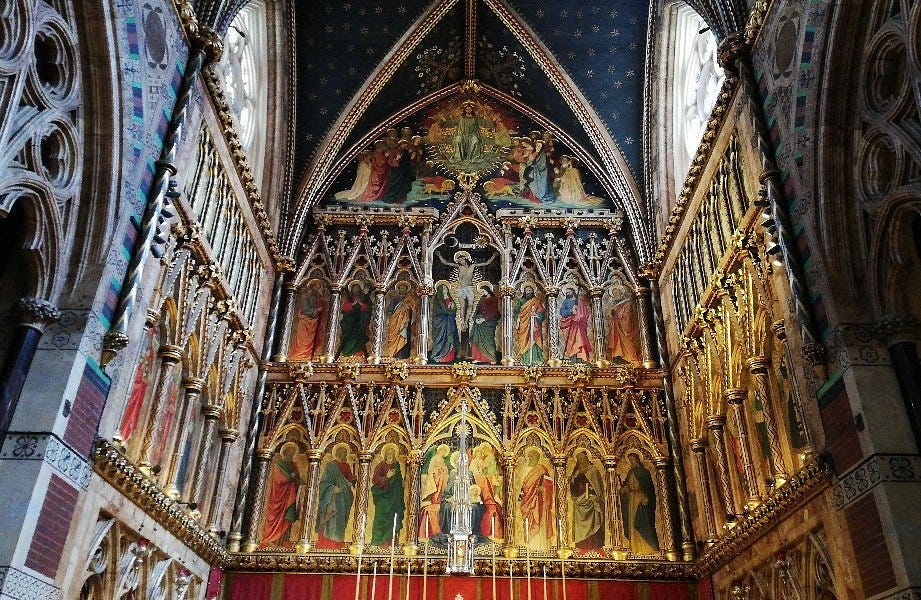
It’s a legacy from the Tudors. Henry VIII broke with Rome and established the Church of England, a kind of fragile coalition between Catholics and Protestants. Under his son, Edward VI, a persecution of Catholics began, followed by his half-sister Mary (Bloody Mary) who went after the Protestants. Then Henry’s youngest child, Elizabeth, pursued a middle path to maintain peace. The Dutch would call this a religious polder model.
In many Anglican churches, the Nicene-Constantinopolitan Creed is recited after the sermon with the text, “I believe in one, holy, catholic, and apostolic Church.” Last Saturday, the morning Mass at my own church, All Saints Blackheath, was dedicated to Saint Cecilia. She’s the Roman martyr and saint known as the patron saint of music, instrument makers, and singers. Our priest enjoys visiting Rome.
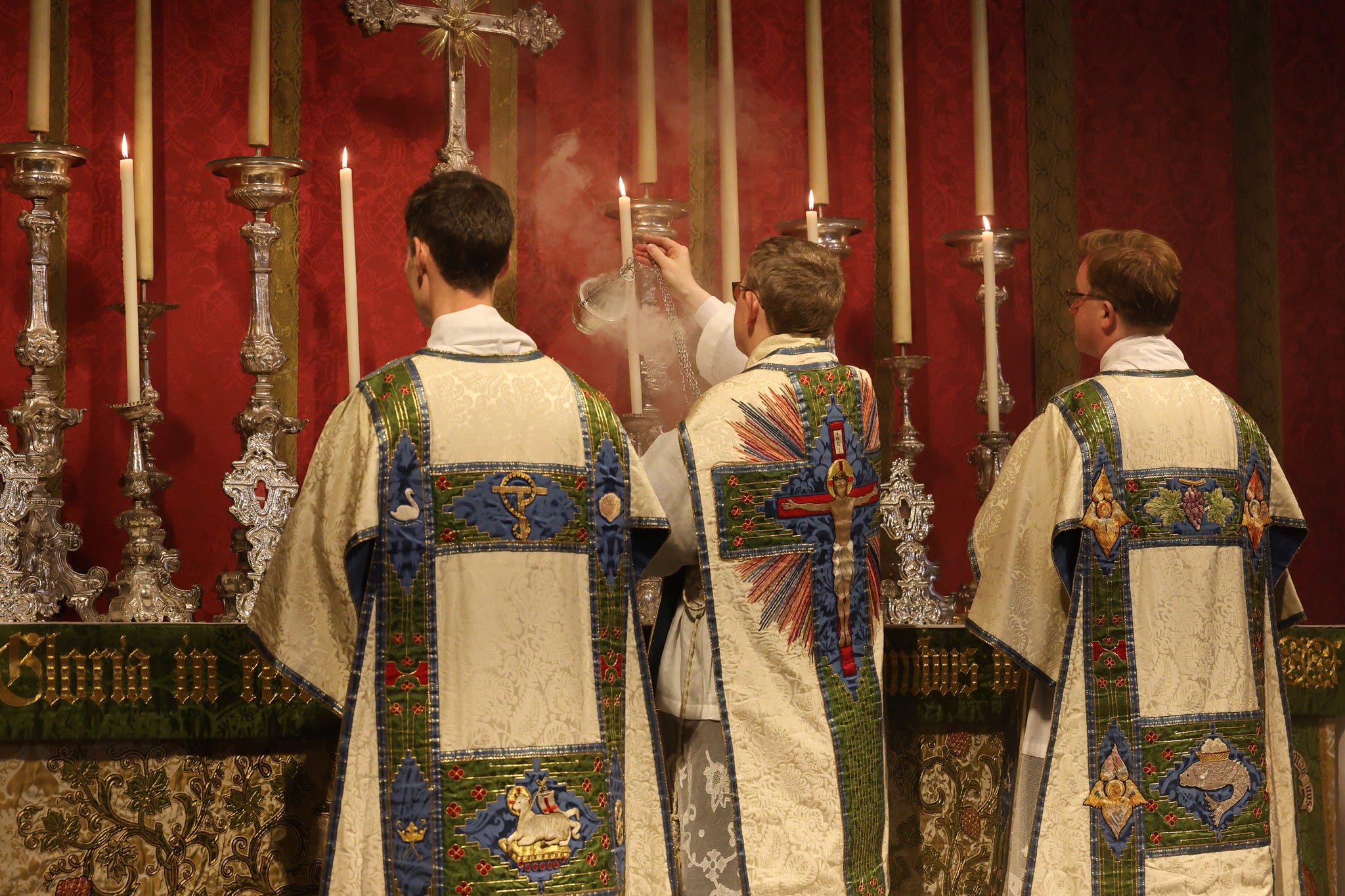
In the High Church category, it doesn’t get much higher than All Saints Margaret Street. It was founded at the end of the 18th century as Margaret Street Chapel. In the 1830s, it joined the Oxford Movement, a theological movement led by John Henry Newman. This influential Anglican theologian converted to the Church of Rome and even became a cardinal there. He was canonised by Pope Benedict.
The church building is a masterpiece by William Butterfield, the leading architect of the Victorian Gothic style that is characteristic of mid-nineteenth century British architecture. Renowned architectural historian Nikolaus Pevsner described the interior as “dazzling, though with a distinctly Victorian ostentation... No part of the walls is left unadorned. From everywhere the praise of the Lord is drilled into you.”
 | A guest post by
|