
Carnegie Library

“The Gift of Andrew Carnegie Esq.” This is the text written on an oval plaque above the entrance to the West Greenwich Library, where I sometimes work. It’s a beautiful building, with red-brick walls and a skylight on the roof. It was built at the beginning of the last century, near another symbol of charity: the Queen Elizabeth College Almshouses, a 207-year-old beguinage with forty houses and 28 apartments.
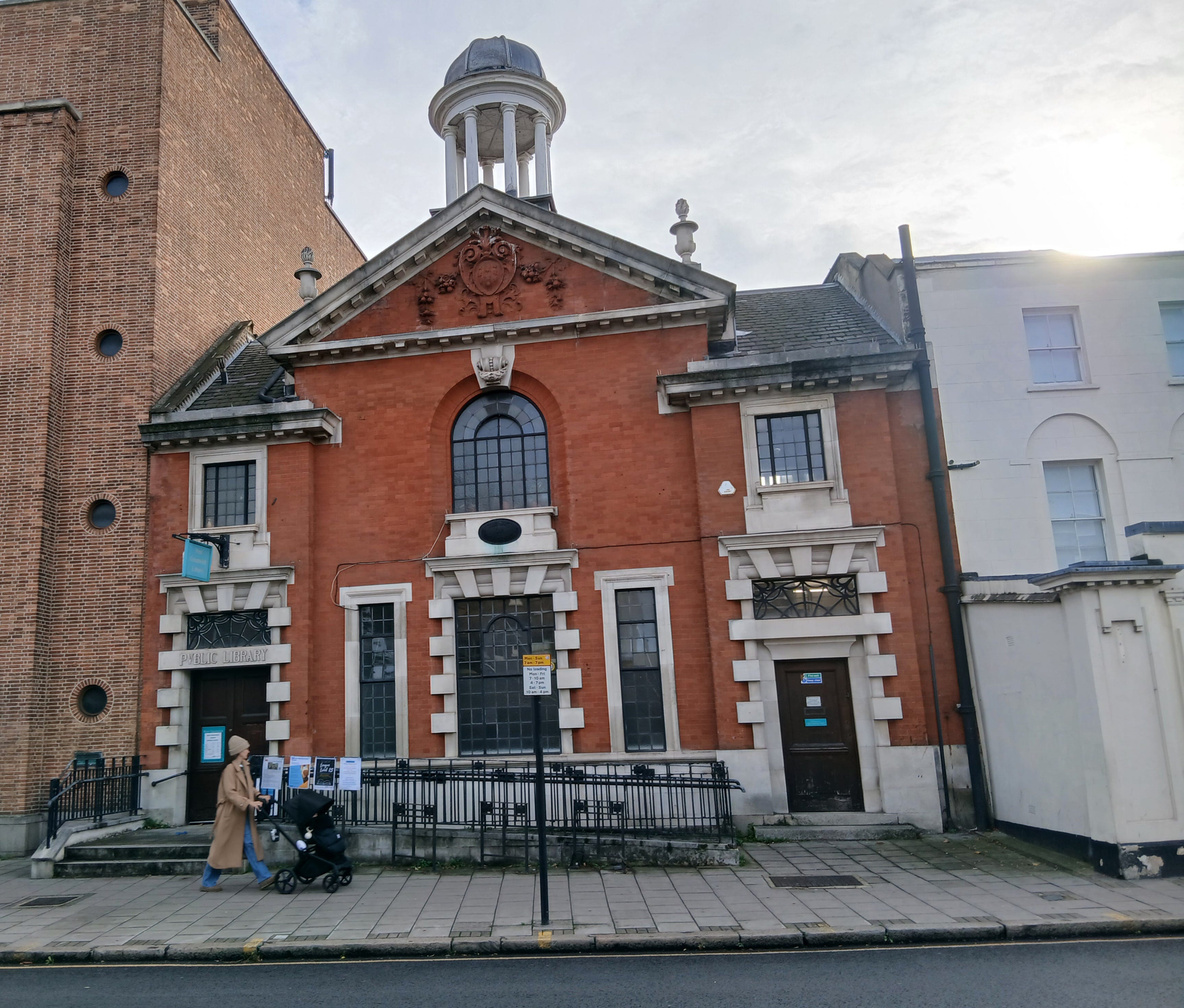
When I saw the name Carnegie years ago, I wondered how the Scottish-American steel magnate was connected to this part of London. I now know that there is no such connection. West Greenwich is just one of 660 locations in the United Kingdom where the millionaire and philanthropist funded a library. Worldwide, there are 2,811, most of which are, reasonably, in the United States.
The first “British Carnegie” was in Dunfermline, opened in 1883. It’s no coincidence that the industrialist was born in this Scottish town in 1835. He emigrated with his parents in 1848, at the age of 12, to what is now Pittsburgh. There, the young man began working in a cotton mill and later as a telegraph operator. He lived the American dream and by the 1860s had investments in railroads, sleeping cars, bridges, and oil derricks.
He amassed further wealth as a bond trader, raising money for American corporations in Europe. He founded the Carnegie Steel Company in Pittsburgh and sold it in 1901 for many millions of dollars to J.P. Morgan. This company formed the basis of the US Steel Corporation. After selling Carnegie Steel, he surpassed John D. Rockefeller as the richest American of the time.
Funding libraries was one of Carnegie’s many charitable endeavours, providing thousands of people with free access to literature and science. In the British Isles, Carnegie assessed funding applications based on criteria that favoured poorer cities. Applicants had to pledge to support and maintain the library. In the Netherlands, the only Dutch Carnegie library is that of the Peace Palace in The Hague.
Over the years, several Carnegie libraries have been demolished, such as the one in Grays, Essex. In other cases, new uses have been found for the libraries, such as the Carnegie Library in Pontefract, Wales, which is now a museum. Elsewhere in Wales, in Abergavenny, plans are now underway to convert the local Carnegie Library into a mosque, a sign of the times.
 | A guest post by
|