
Churchyards
A few of my favourite things: number 3

If you don’t have time for a walk, you can always wander. Preferably through a churchyard. There, history smiles at you. This is especially true when celebrities are buried there. However, the gravestones of ordinary mortals are actually even more interesting. Nearly all have a story to tell.
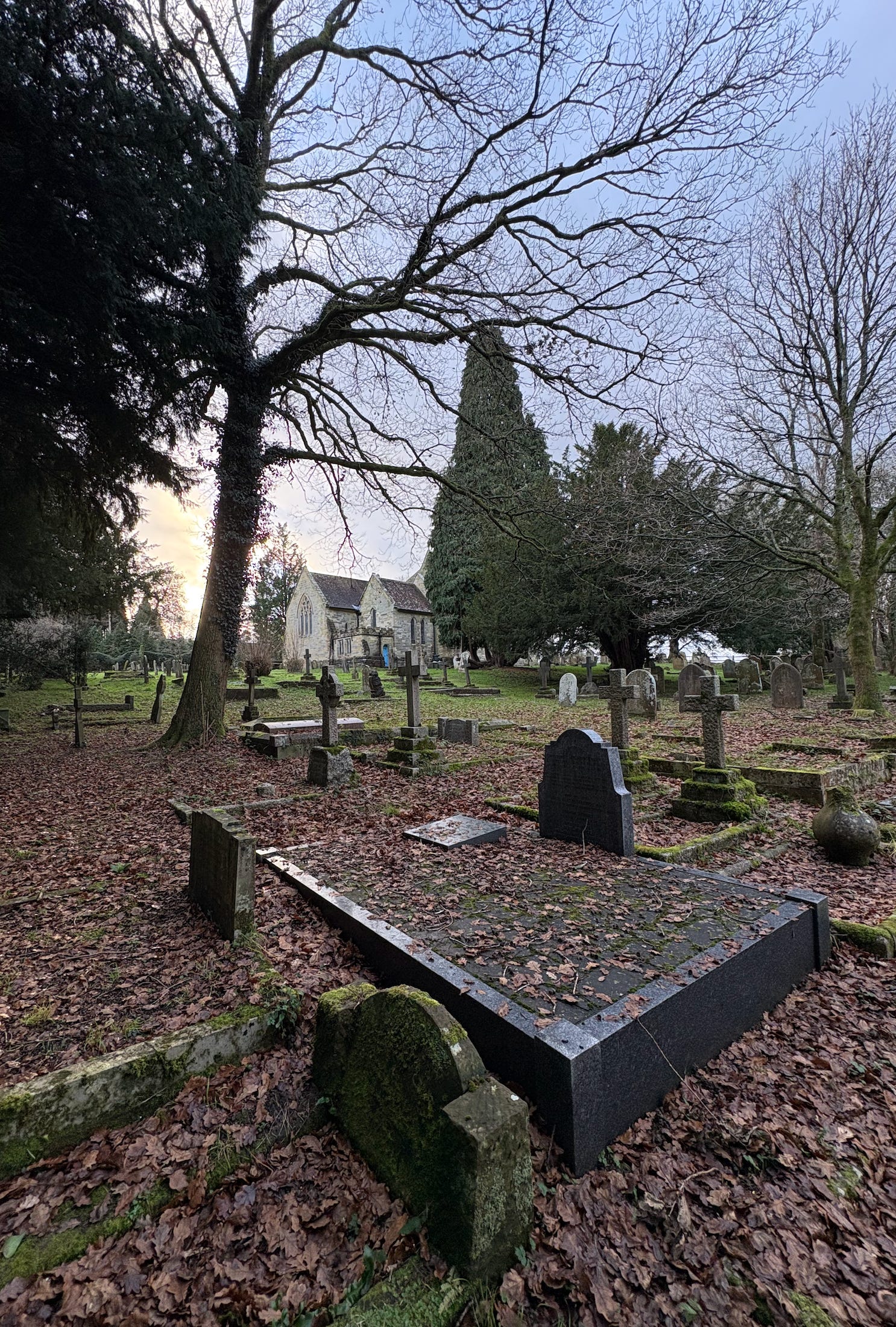
I’m not the only one who loves small churchyards. Bill Bryson is also clearly a fan. In his unsurpassed “ Notes of a Small Island,” he found the grave of George Orwell in Sutton Courtenay, where he’s buried under his real name, Eric Blair. Then, Bryson wandered a bit further into the cemetery and found the grave of Ruben Loveridge, “who fell asleep on April 29, 1950.” It’s a curious place, Bryson remarked, where they bury people after they fall asleep.
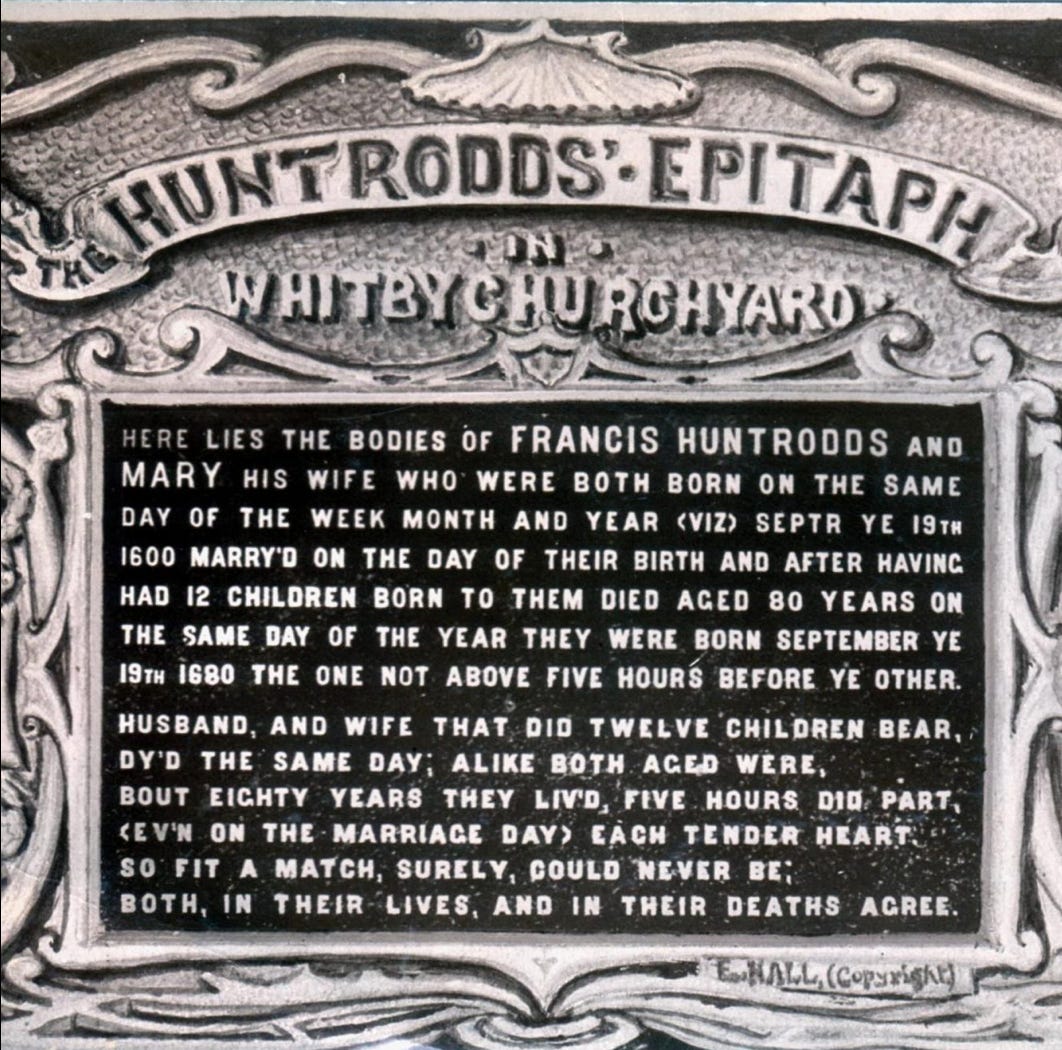
There is also the the story of Francis and Mary Huntrodds. They were both born on September 19, 1600. They married on their birthdays. Both died, Mary five hours after Francis, on September 19, 1680. A bit spooky, isn’t it? They are buried in the churchyard of St Mary’s in Whitby, the church featured in Bram Stoker’s novel Dracula.
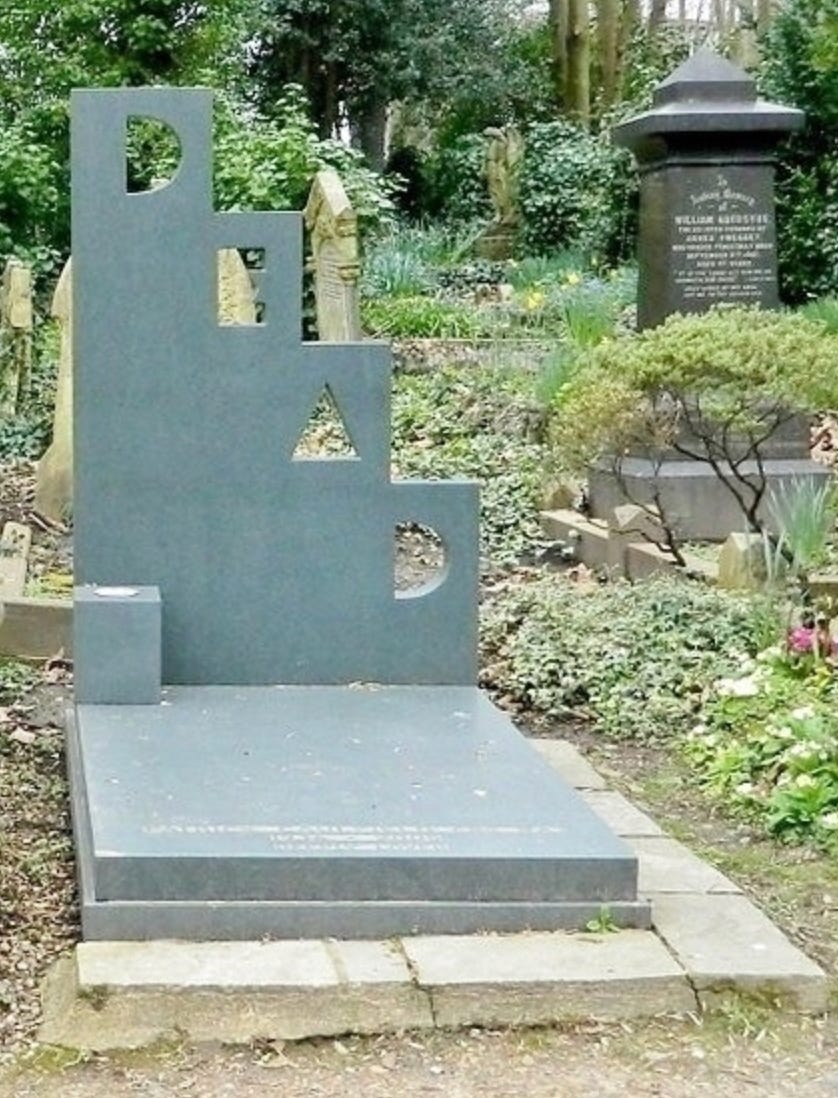
There’s also a gravestone in Highgate, London for the artist Patrick Caulfield, who died in 2005, Caulfield was not religious and somewhat fatalistic, as his memorial makes abundantly clear. It was his last work of art.
You always find something amazing in a cemetery. This afternoon I wandered through our local churchyard. The oldest stone dates back to 1654, as far as I could make out. I also saw stones belonging to villagers I used to know.
The churchyard is mostly a jumble of stones that certainly don’t follow the strict rules governing Dutch cemeteries. However it also lacks the frivolity you find in French graveyards where I once saw a card game portrayed on a stone.
The stones here are generally tasteful. A significant number of the headstones are still carved by hand which gives them a unique character. One of the stones in the Balcombe Churchyard was carved by Julie. It’s the most beautiful.
Reading the inscriptions on the stones is even more interesting. “An angel in disguise,” reads one. You can barely suppress a smile, until it becomes clear that it’s the stone for an eighteen-year-old boy. The bereaved didn’t want to hide the tragedy of this life.
“Beloved father and grandfather,” reads another stone. The man died in the 1950s, before divorce was common, and apparently his wife didn’t think much of him. A 96-year-old man is remembered as a “lifelong beekeeper.” This doesn’t seem like the kind of thing to convince Peter at the gates of heaven.
It doesn’t matter. What matters is that another world opens up as you stroll through such a cemetery. The dead come back to life. Its only when you leave the cemetery that peace returns. And it has been that way for centuries.