
Dido

Visiting Kenwood House this summer, I learned about the remarkable life of Dido Elizabeth Belle, a woman born into slavery in the West Indies in the mid-18th century but died a wealthy, highly educated, and respected heiress in London. Maria Belle, as she was known as a child, was the daughter of an African woman, a worker on a Caribbean plantation, and Sir John Lindsay, a naval officer who had become captain of the British warship HMS Trent.
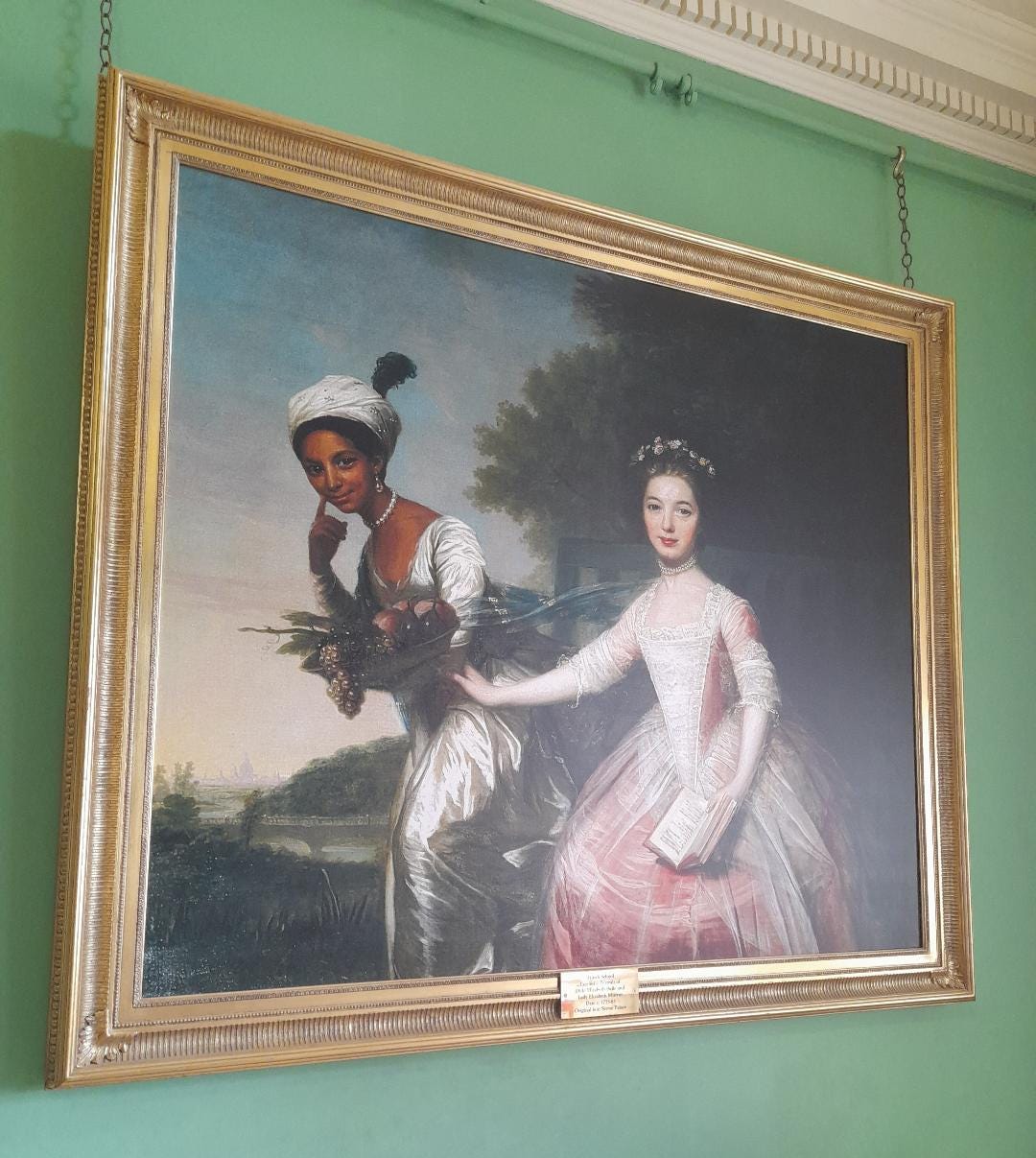
Lindsay took her to London, where she was accepted into high society, baptized at St. George’s Church, Bloomsbury, and built a career as a secretary to Lord Mansfield, a high-ranking judge. She is said to have influenced several of his most important rulings on slavery. For example, he ensured that slaves were considered human beings in the eyes of the law, rather than animals or cargo. Mansfield owned Kenwood House, which is why she was able to live in this beautiful place.
The beautiful young woman helped oversee Kenwood’s dairy and poultry farm, a common practice for women of distinction at the time. She got along particularly well with Lady Elizabeth Murray. Scottish artist David Martin immortalised the two in a painting that can be seen in one of the rooms of the publicly accessible Kenwood House. In it, the two women are depicted as equals, which was highly unusual in an era when darker-skinned women were typically portrayed as subservient slaves.
Shortly after the death of Mansfield, she married John Davinier, a Frenchman. The two had three sons, Charles, John, and William. Their mother died young, at 43. She was buried at St. George’s Fields in Westminster. Two of her sons went on to work for the East India Company. Belle’s last known descendant was her great-great-grandson, Harold Davinier, a car mechanic who died childless and left a £250 estate in South Africa half a century ago.
Dido lives on in books, films and plays.
 | A guest post by
|