
The Bell
The Pilgrimage

Last Sunday, as described in a previous post, I took a walk with my daughter Claire past seven medieval churches in East Sussex. It was a true pleasure. The walk is called a pilgrimage but I am trying to fathom why.
Once, as a young man just shy of fifty, I walked the Camino to Santiago. I started in Le Puy-en-Velay in France and walked to Santiago in six weeks. After that, I did it all over again, walking from Salamanca to Santiago in two weeks. I walked a total of 1,994 kilometres, as attested on the ‘Compostella’ I received after completing my journey.
That is, of course, quite a distance. However, I remember two women, somewhere towards the end of my second trip, who made it clear to me that I was ‘not a real pilgrim’. According to them, I was walking too many kilometers a day. By rushing from one place to another, I was ‘not letting the Camino penetrate my heart’.
I remember the worried look in the woman’s eyes. She was with a fellow pilgrim who nodded in agreement and felt so much sympathy for me. They just couldn’t understand that I didn’t get what I was missing.
I had been surprised by the way walkers judged each other on their ‘true pilgrim’ credentials. People who took a bus every now and then were no good; people who had their luggage sent from place to place without carrying it themselves clearly hadn’t understood it properly. And people like me, who didn’t pause at every opportunity to marvel at anything—pardon: meditate—about anything at all—were also in the wrong.
I shrugged it off. But ten years later, I still wonder how you can call a walk of less than twenty kilometres a pilgrimage. Granted, there are some churches you pass, but the relics, which were the whole point of the original Camino pilgrims, were thrown into the River Cuckmere by the Anglicans who ran the churches sometime in the sixteenth century.
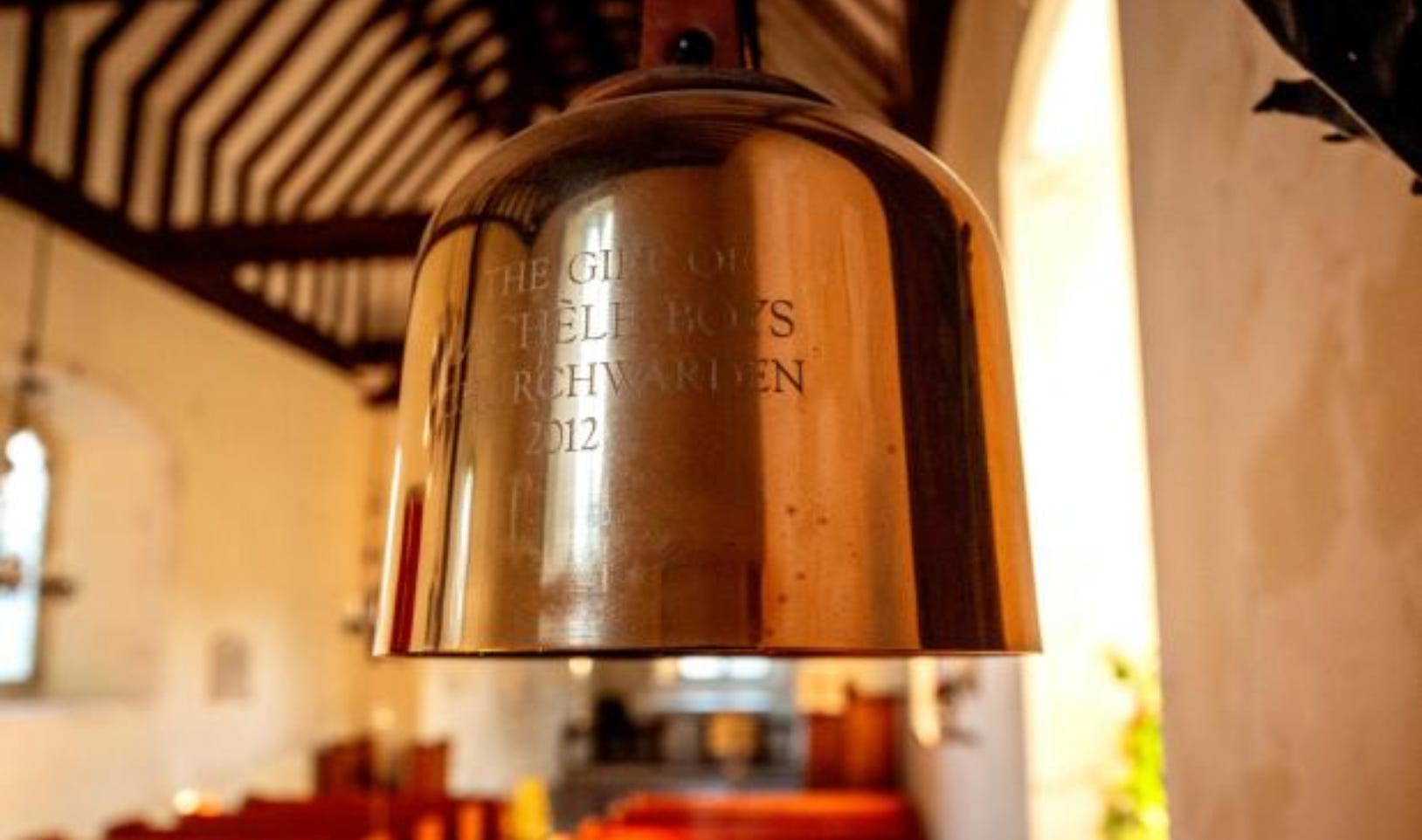
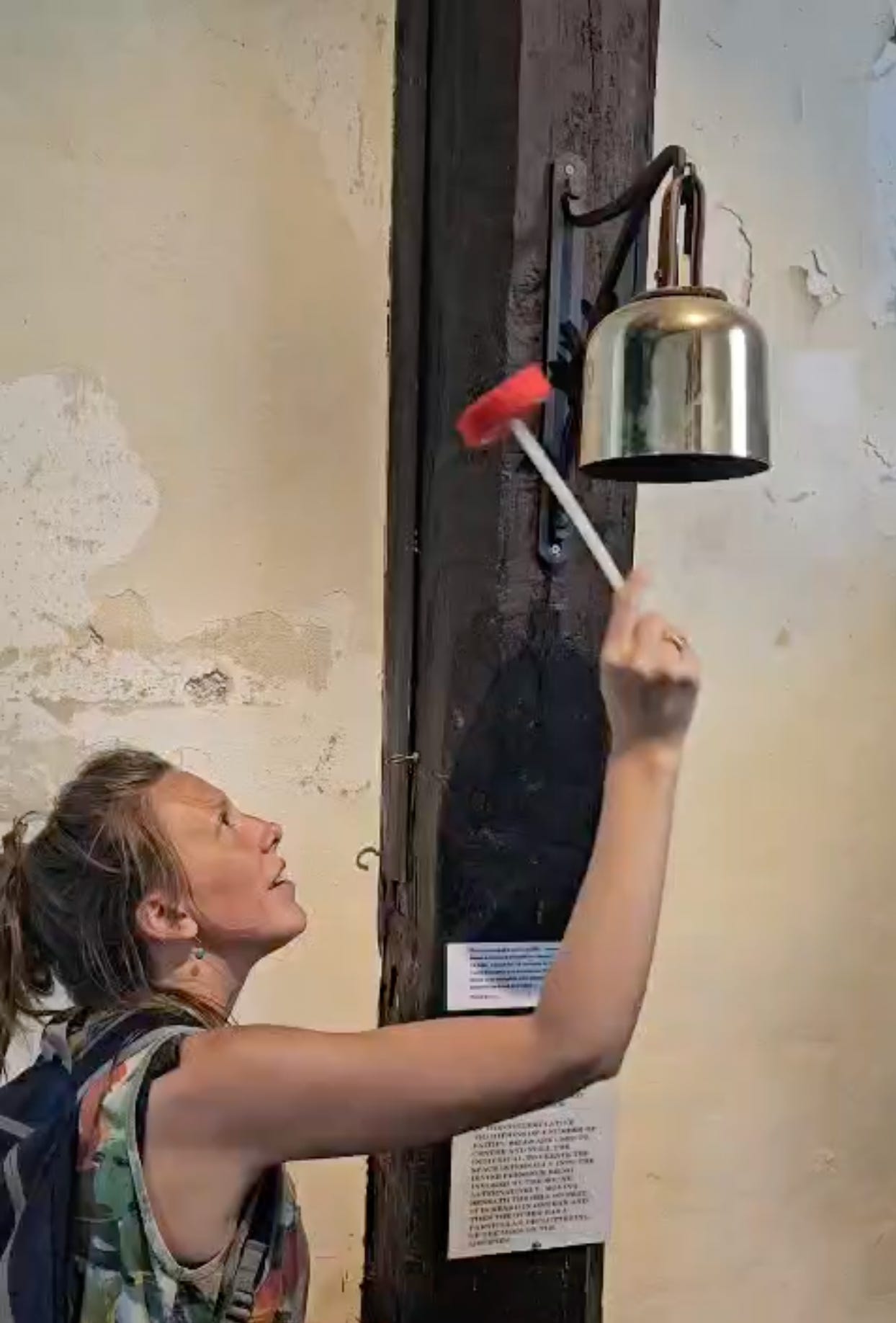
I found the answer to my question in the church in Alciston, one of the churches on our route. A beautiful bronze bell hung there. It had been donated in 2012 by one of the church wardens. The bell was cast at the Whitechapel foundry, where Big Ben and the American Liberty Bell also come from.
According to an explanation accompanying the bell, the sound creates an ‘inner space that makes it possible to experience the divine presence invoked by the sound.’ It helped to move from side to side so that the ringing traveled from one ear to the other.
This is what makes a walk like this worth doing. Naturally, I didn’t do it entirely correctly, just like on my first pilgrimages to Santiago, but practice makes perfect, they say.
One thing I do know. That sound was wondrous. According to the brochure, it was supposed to last at least thirty seconds. But well after a minute, a buzzing was still audible and it gave a tingling sensation - a bit like you had just walked hundreds of kilometres. Very good.
Love this!