
The first fly-over

The world’s first flyover is located in London, on the edge of the City of London. The urban Holborn Viaduct was designed to allow traffic to bypass the muddy slopes of Fleet Valley below. The River Fleet, which gave its name to nearby Fleet Street, once flowed there. On November 6, 1869, Victoria opened the elegant flyover. It was a busy day for the Queen, as she later opened the new Blackfriars Bridge, a few hundred meters away.
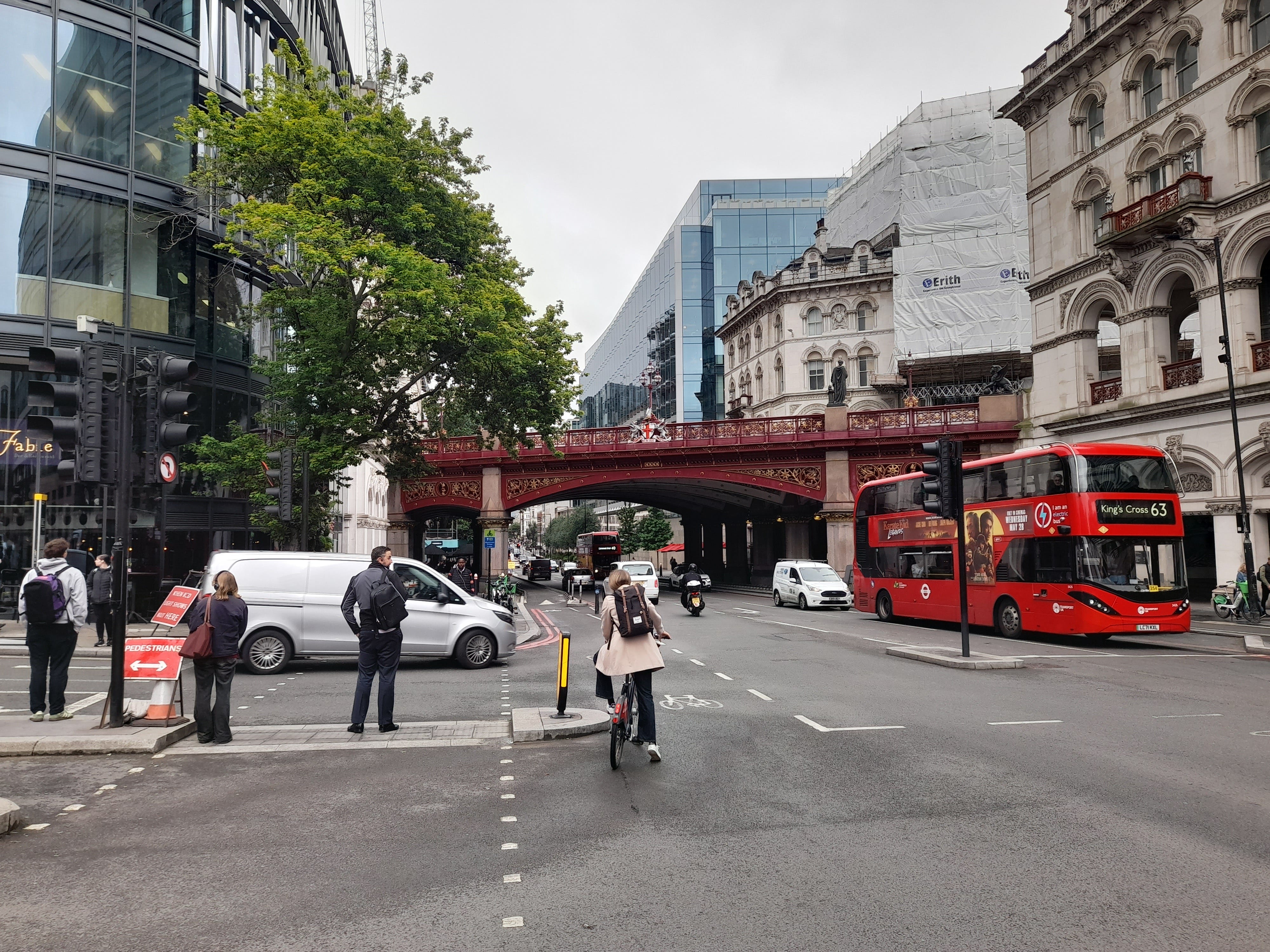
With its red, slanting span of iron girders supported by granite pillars, the new structure was described by Philip Ward-Jackson as “the most ostentatious contribution to the Victorian modernisation of the capital.” The name of the engineer, William Haywood, is inscribed on one of the pillars. He served ably for 49 years as Chief Engineer to the City Sewer Commissioners.
The figures on the front of the staircases represent prominent Londoners. William Walworth, for example, was twice Mayor of London in the fourteenth century and is best known for having Wat Tyler killed during the Peasants’ Revolt in 1381. There is also a statue of Henry FitzEylwin, the first Mayor of London. His hands rest on a battle axe, and he wears a surcoat over his chain mail.
Sir Thomas Gresham, the founder of the stock exchange, is also honored, dressed in 16th-century costume and holding a parchment. The fourth man is Sir Hugh Myddleton, a goldsmith and entrepreneur who brought fresh water from Hertfordshire to London. This remained London’s main source of piped water for 300 years, and Robert Stephenson considered him “the first English engineer.”
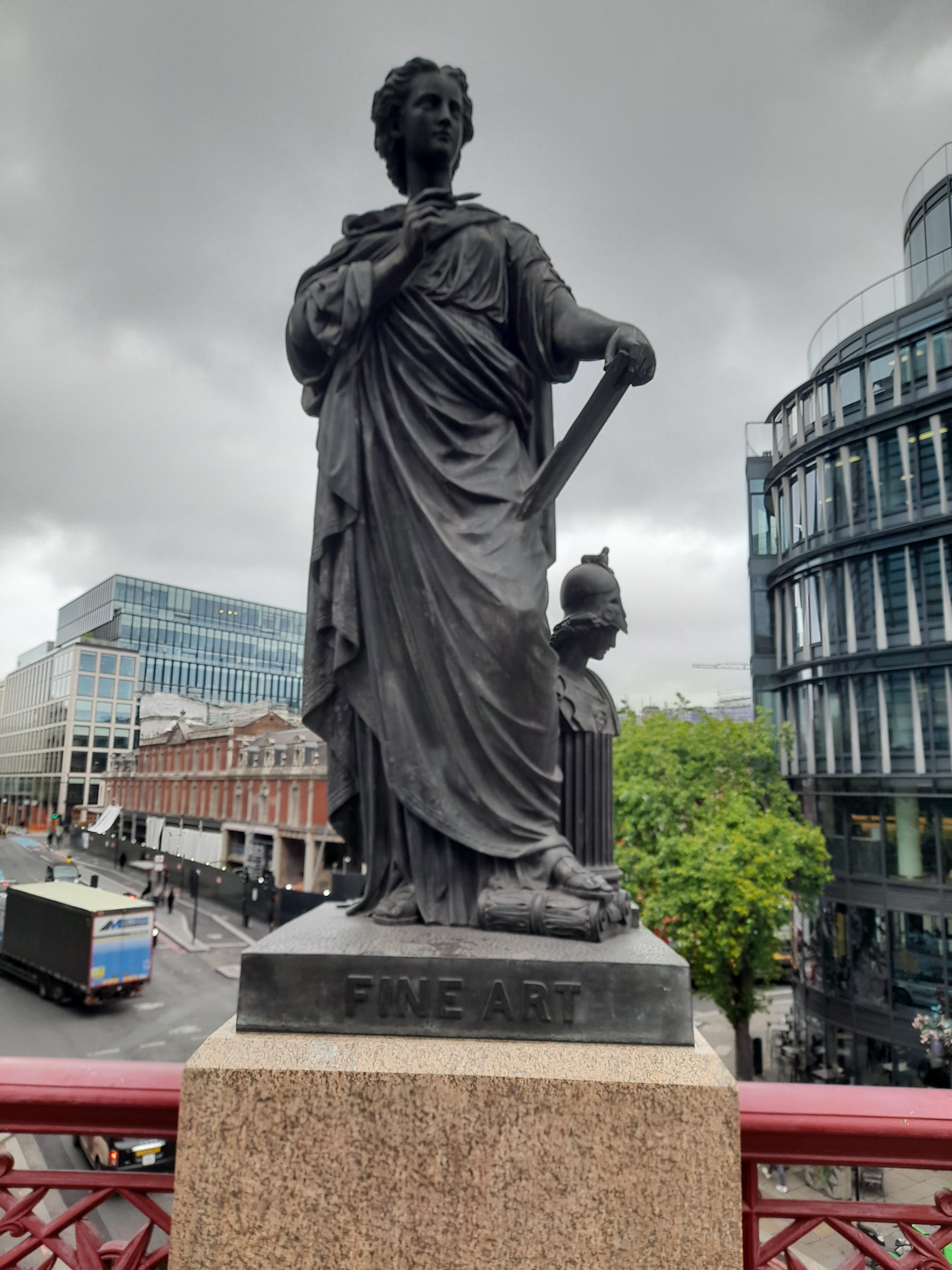
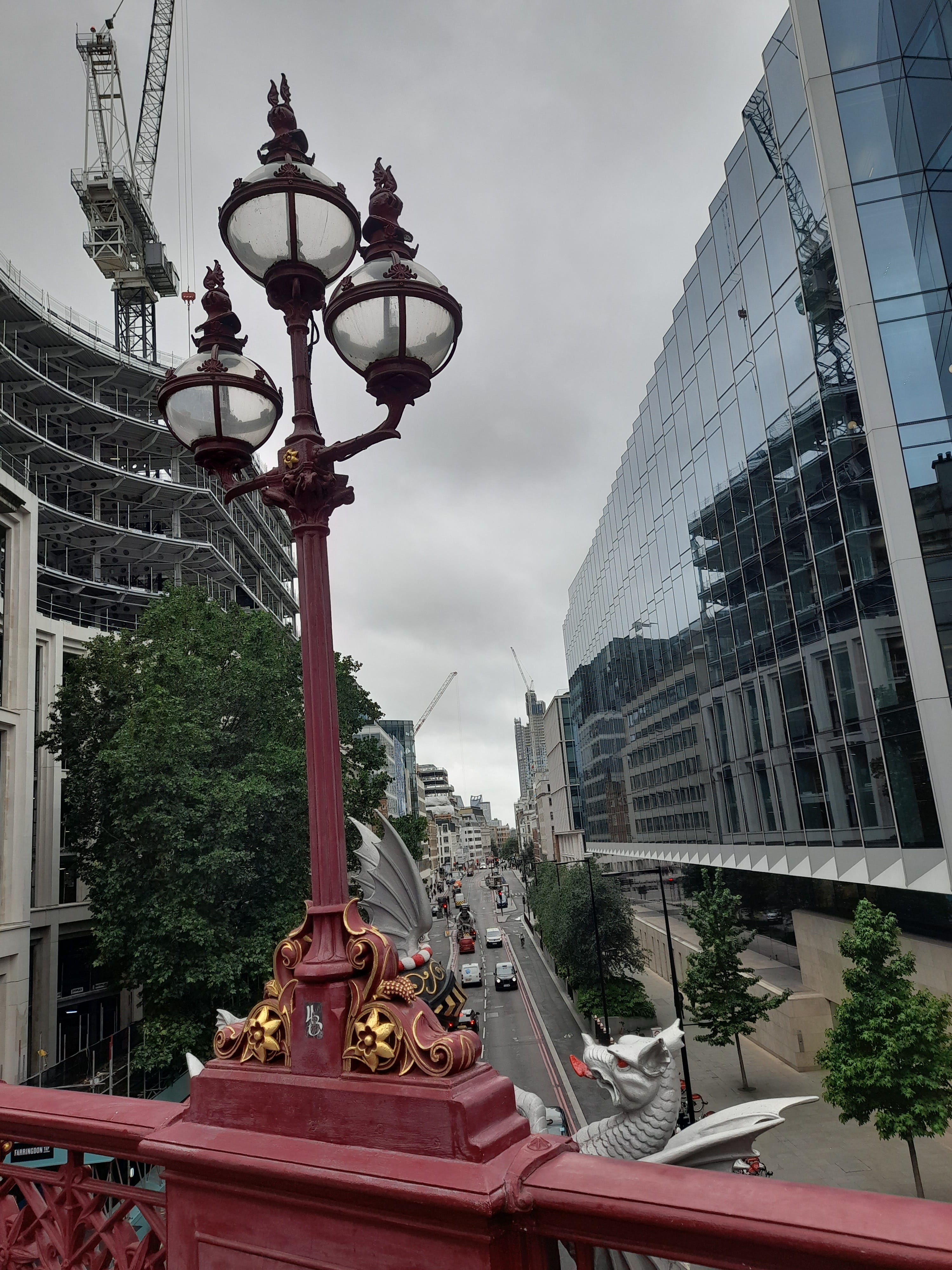
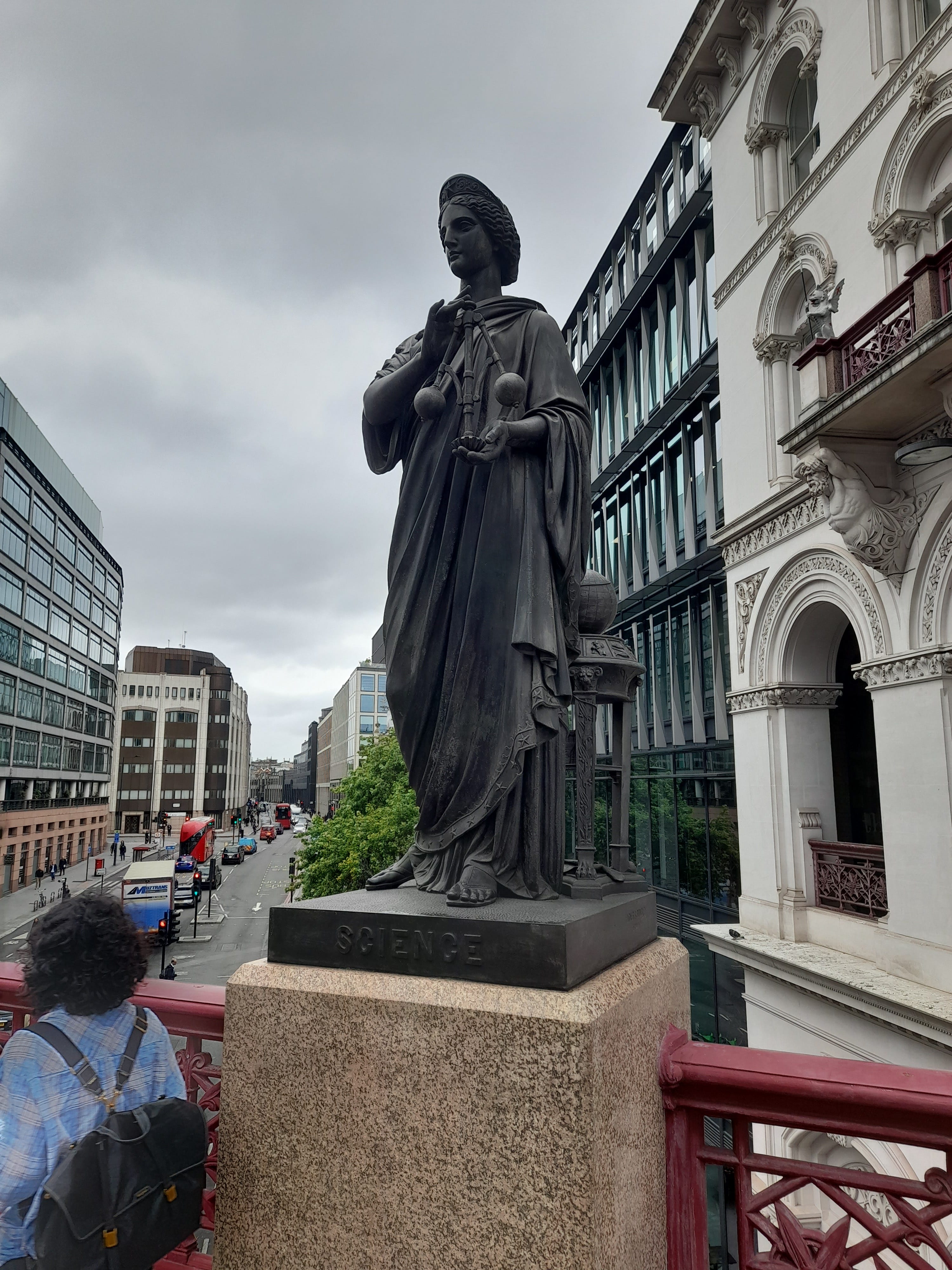
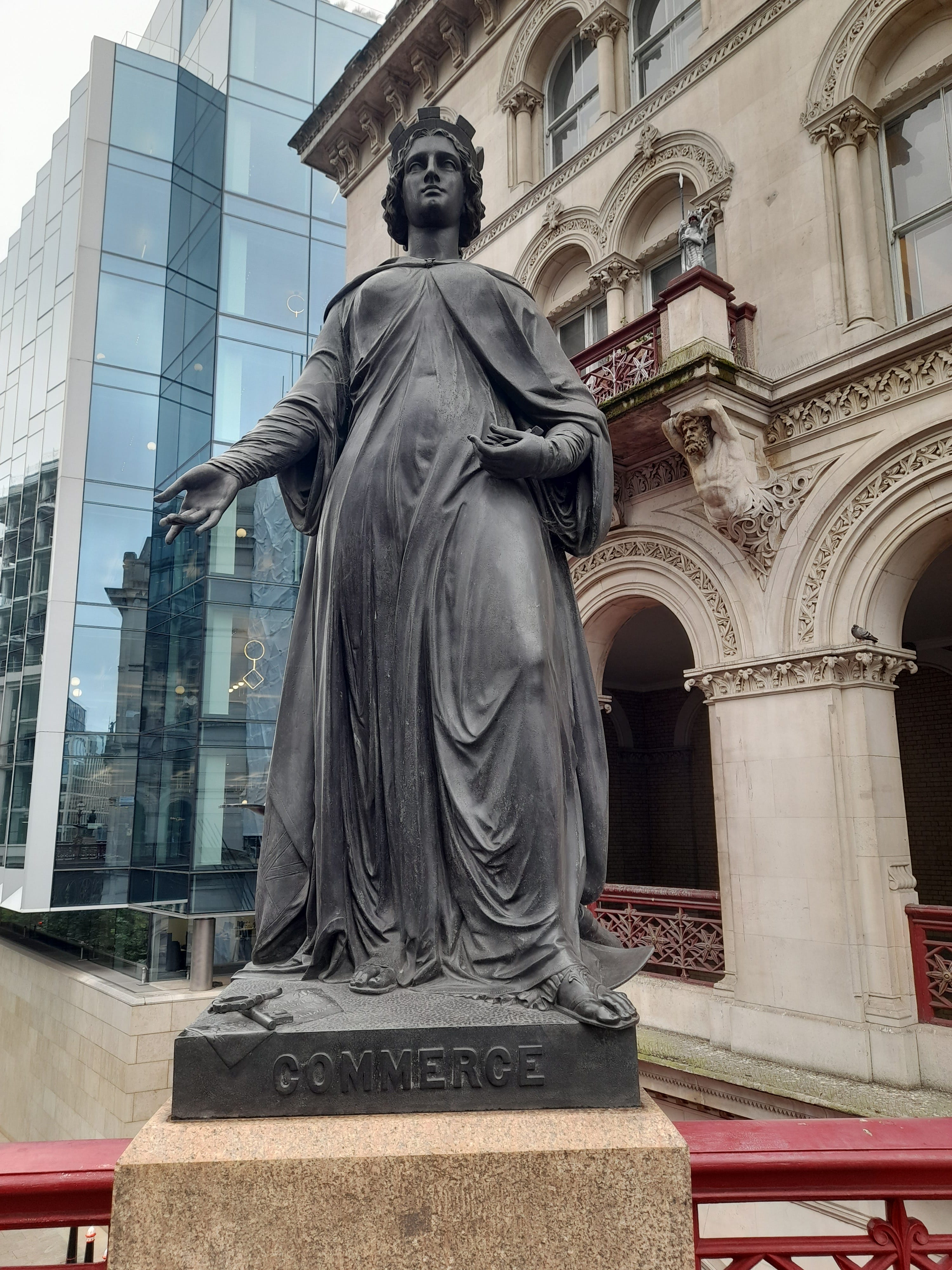
On the bridge itself, guarded by winged lions, stand four female figures representing Science, Fine Arts, Commerce, and Agriculture. Commerce wears a castellated crown, suggesting the city’s status and wealth. She holds coins and gold in one hand, while the other is extended in a gesture of welcome. At her feet lie the keys to the city and a parchment guaranteeing the city’s freedom.
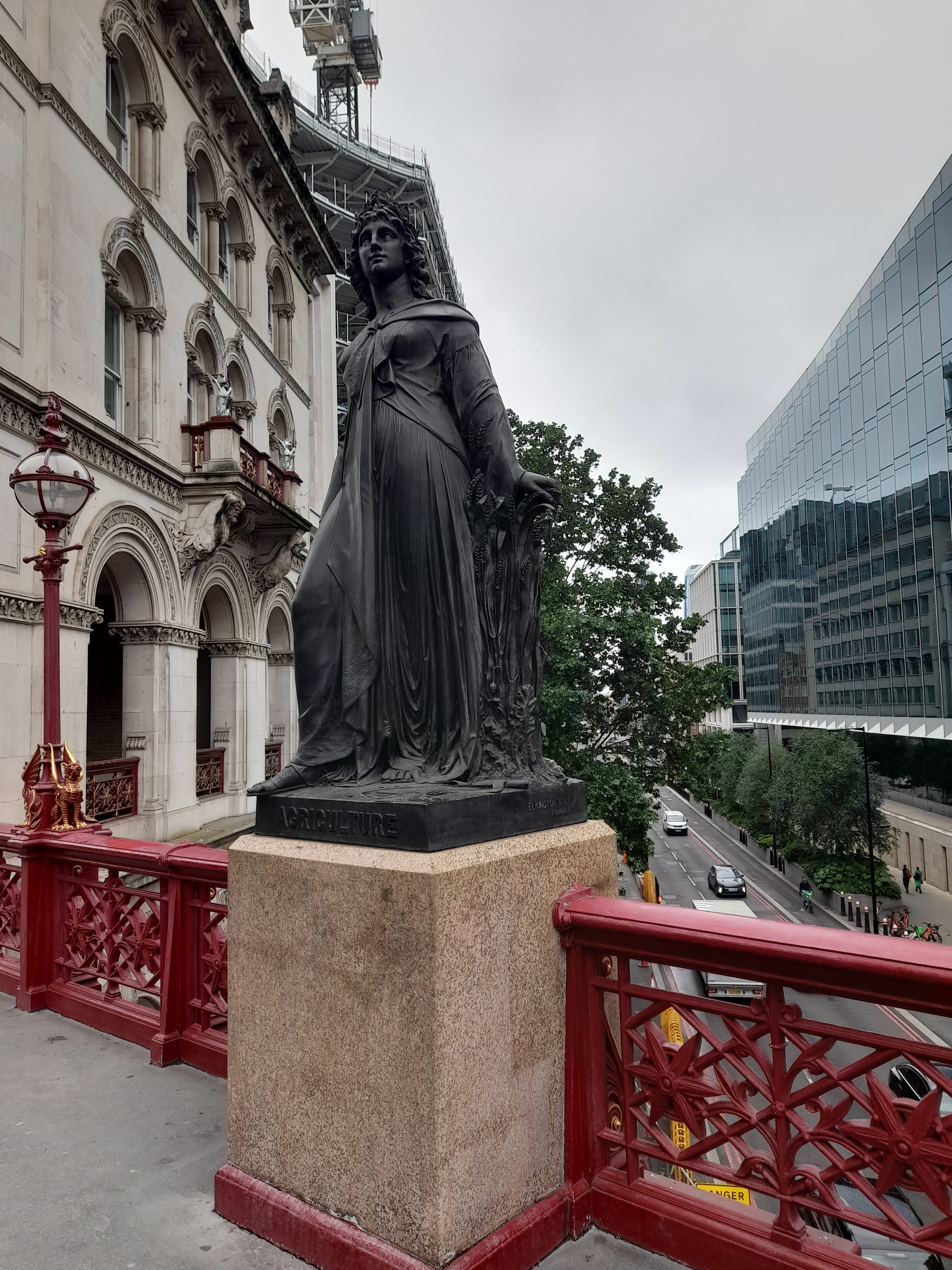
Agriculture’s crown is made of olive leaves, and her robe is trimmed with oak leaves. Beside her grows grain mixed with poppies. Mrs. Science, who appears masculine, wears a tiara with a star in the center. Stars form the fringe of her robe. In her hand, she holds the “regulators” used to control steam engines. To her left stands a tripod with a globe on it, surrounded by an electric telegraph wire.
The patroness of the Fine Arts holds a colored pencil in her right hand, “for drawing is the most essential principle in design.” In her left hand and resting on one of her thighs, she holds a drawing board with a piece of paper pinned to it. Her left foot rests on an Ionic capital, a symbol of architecture. Behind her is a section of a Corinthian column, on which stands a bust of Pallas Athena.
The proud Victorians certainly knew how to make public spaces beautiful.
 | A guest post by
|