
The Long Man
Ignorance is bliss

In a week when the Reform Party is expected to achieve a major victory in the local elections, it is helpful to realise that ignorance can be a blessing. I realised this during a walk with my daughter Claire around The Long Man of Wilmington.
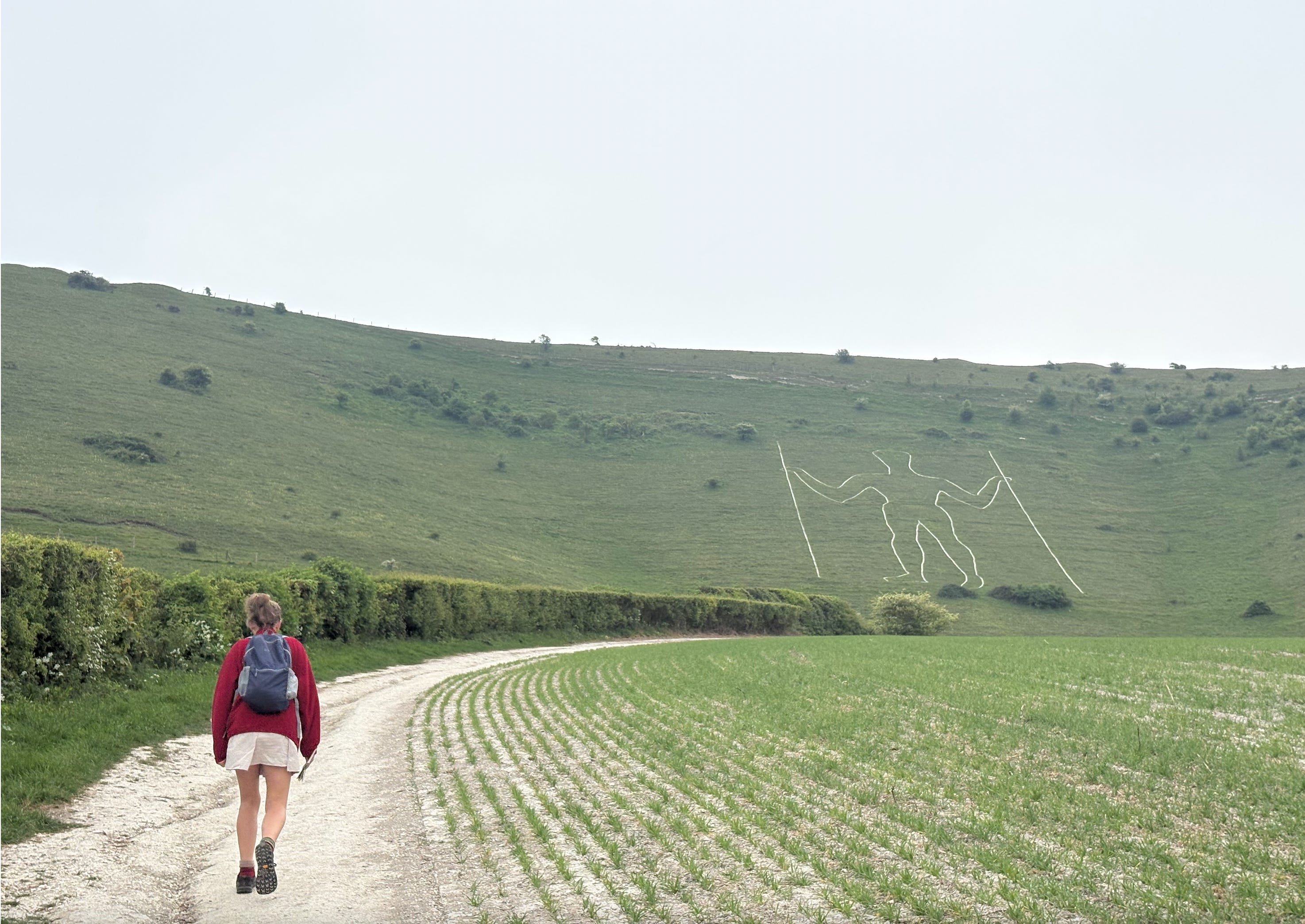
That tall man is a good friend of ours. Over the years, we have driven to see him several times. It is always a bit of a search. Although The Long Man is over seventy meters tall and is prominently situated on the north side of The South Downs near Wilmington, I don’t think he can be seen from the A27 between Lewes and Eastbourne. You have to turn off, drive through Wilmington, and then suddenly, the enormous chalk drawing appears.
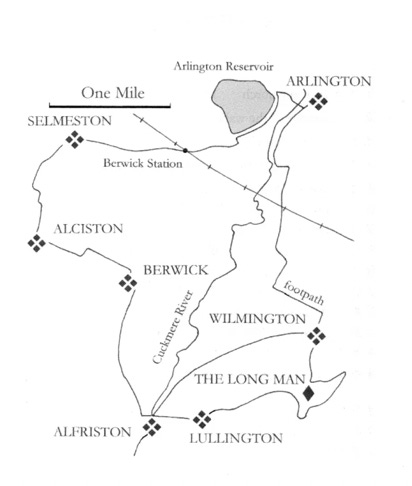
This time we did things differently. We decided to take advantage of the sunny spring weather to walk the Cuckmere Pilgrim Path, a walk past seven medieval churches on either side of the Cuckmere River in East Sussex. We started in Arlington, the farthest away from the South Downs
We had scarcely left the small town when we saw The Long Man in the distance. Although not visible from the A27, he becomes so when you are a bit further away. Sometimes the tall man would briefly hide behind a tree or a hedge, but he soon reappeared, each time a little bigger and a little brighter.
The last stretch involved quite a climb, but then, for the first time, we truly stood at the foot of The Long Man. He was big and mighty. It was beautiful to think that a group of prehistoric—or so we assumed—friends had once taken the trouble to scrape the grass from the chalk hill to display this elegant man with two long sticks.
Over the years, I always assumed that the figure was made of chalk. I remember someone once telling me that it had helped with the annual ‘cleaning’ of The Long Man. I had assumed that the limestone was scraped clean again during that process.
That turns out not to be the case. In reality, we are talking about concrete slabs. These (as we read on the information board standing at the foot of The Long Man) replaced the blocks of yellow stone that local residents had lain sometime in the nineteenth century—in the Victorian era - over the original.
It is information I would much rather not have known. After passing The Long Man, we soon ascended to the top of the South Downs. Then it was a relatively easy walk, mostly downhill, towards Afriston and Berwick and then back to Arlington.
For most of this trip, The Long Man was once again hidden behind a ridge. When he reappeared, he had changed. He was no longer made of chalk, but of concrete, which sounds less appealing. Moreover, I learned something else. The Long Man does not date from prehistory, but from the sixteenth century. That, too, is information I’d just as rather not know.