
The Planets
Antony Gormley in Londen

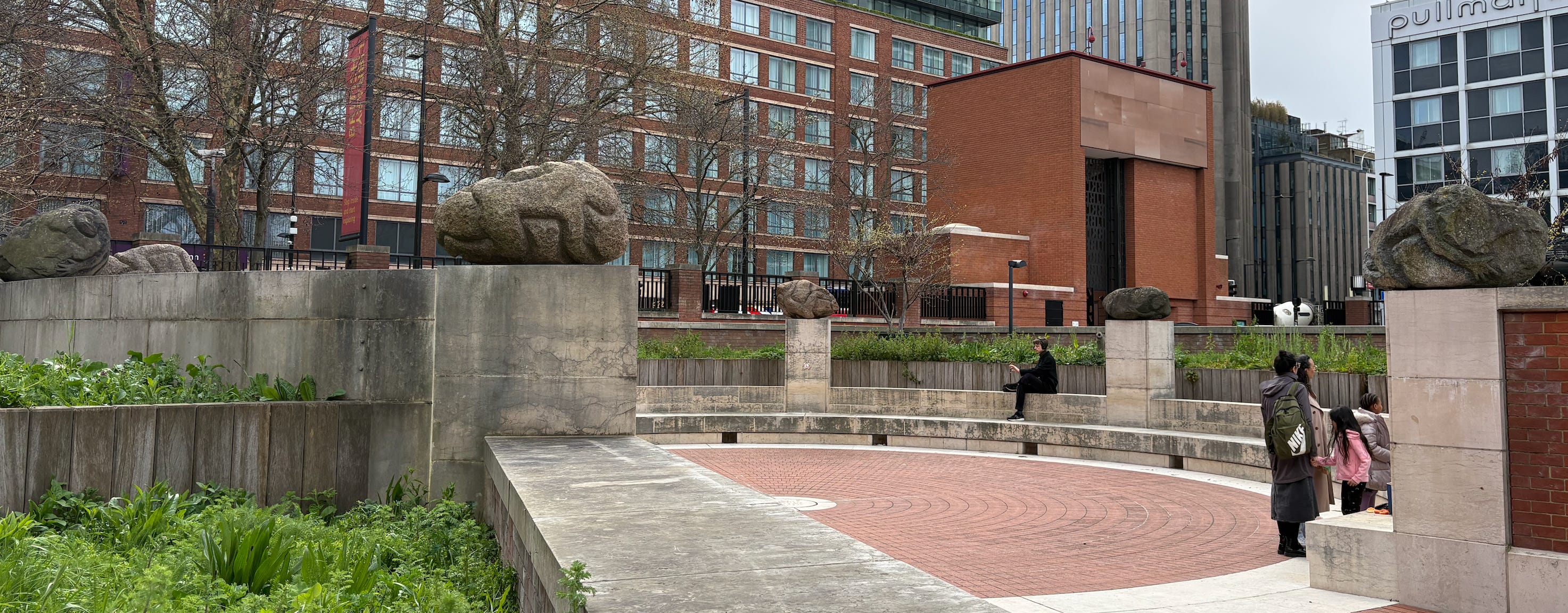
In 1987, visual artist Antony Gormley felt like a king when he received the commission to execute his design for the art project The Planets. The eight sculpted Swedish boulders were allocated a spot on the square in front of the new British Library building next to St Pancras train station in London.
Gormley celebrated a little too soon. Due to gross, and typical, cost overruns in the construction of the red brick monster, – original budget £60 million, final costs £450 million – the art budget was drastically cut as punishment. “We are sorry,” Gormley was told, “but on second thought, we do not have the money for your wonderful idea.”
Eventually, the planets were installed after all. When he initially received the prestigious British Library commission, Gormley was known only to insiders. However, in 1994 he won the Turner Prize, and his Angel of the North, still his most famous work, was installed in 1998.
At The British Library, they realised that a mistake had been made. Government funds were still unavailable, but the necessary millions to complete the project were raised through donations. Gormley, who by this time was no longer working with stone, was given the opportunity to reconsider his original design, one of his first works. He stuck to the original plan.
Twelve boulders, each weighing between 750 and 1,000 kilograms, were transported from southern Sweden. The rock is millions of years old, possibly up to a billion years old. Gormley sculpted the egg-shaped stones with figures based on the bodies of himself, family members, and employees.
Ultimately, eight were chosen. At the opening of the installation, Gormley (who studied Archaeology, Anthropology, and Art History at Cambridge) explained, “What I wanted to show is the dependence of bodies, our bodies, on the physical world and Mother Earth,”
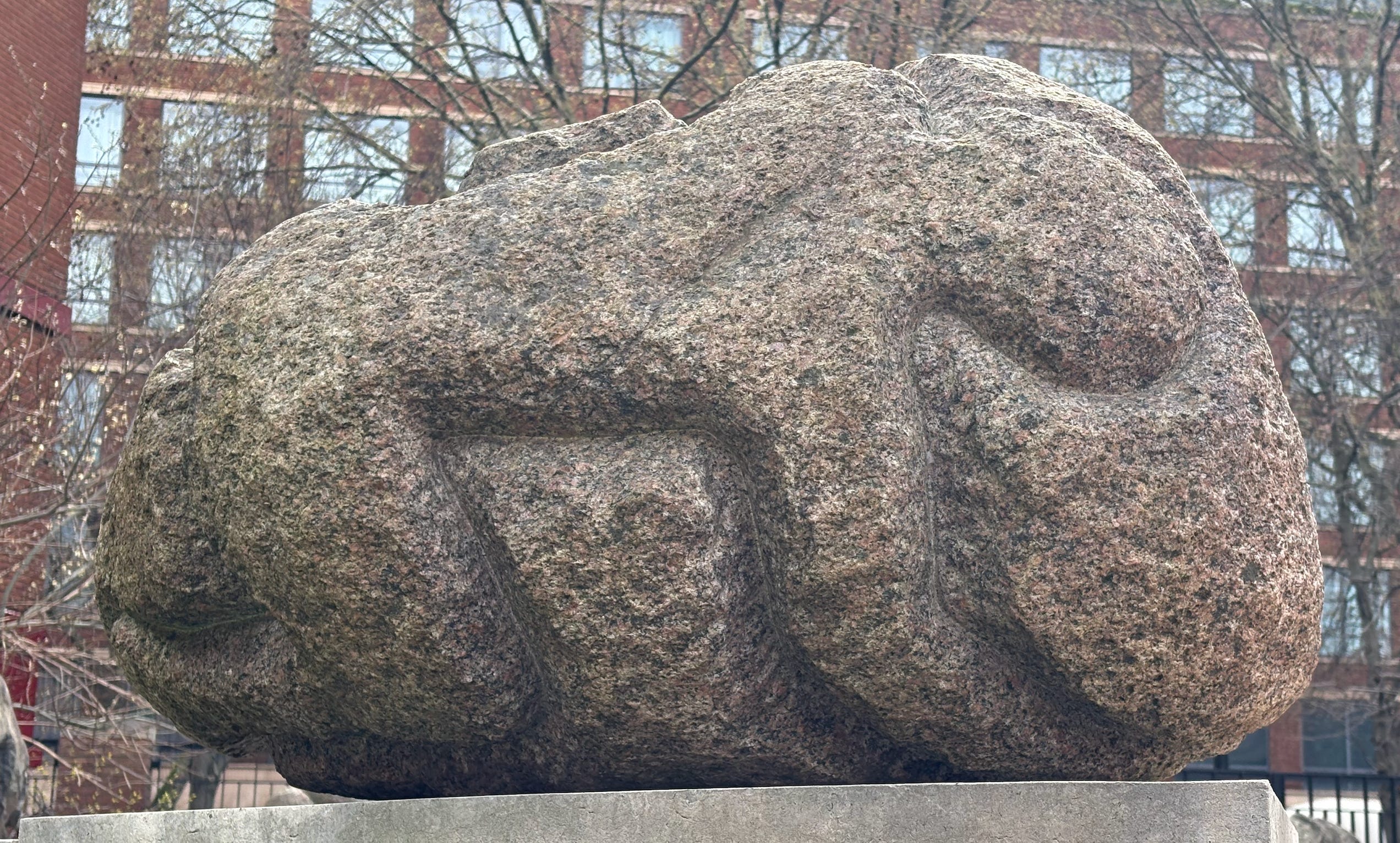
The national poet Simon Armitage offered his own interpretation. He contrasted the way the stones have taken shape over the centuries with the ‘treasury of gilded words’ in the library. It is a beautiful poem.
Entrance
by Simon Armitage
For comparison’s sake, imagine these rocks
As ova thrown from the core,
As the eggs of the Earth,
Rolled and revolved by time,
Nagged at by air and suspended in ice
And shunted westwards in the general flow
at the pace of knowledge – glacially slow.
It’s lunchtime now
With sunlight lazing on benches
And quarried slabs
Reglazing the Library doors.
So exit the vault of guilded words,
Leave the bullion of rare thoughts
And enter the dial of privacy,
The captured orbit of privet and brick
Where the eight eggs of the Earth
Fetched up after billions of hours,
Each one now etched
with a halfway-visible human form.
And yet these bodies are neither hetched nor born;
Look closely – they seem to be clinging on with gecko fingers
Or climbing in – shouldering, burrowing,
Tunneling through tot he inside,
Showing the way
As though by doing the same
We might follow them home.
They circle us,
turning our minds to stone.