
There's always something
New banknotes

The English will soon have to get used to new banknotes. Soon, the historical figures who have featured on banknotes since 1970, like my hero Winston Churchill, will be gone. Instead, the English will get to vote on which flora and fauna they want to grace the future banknotes.
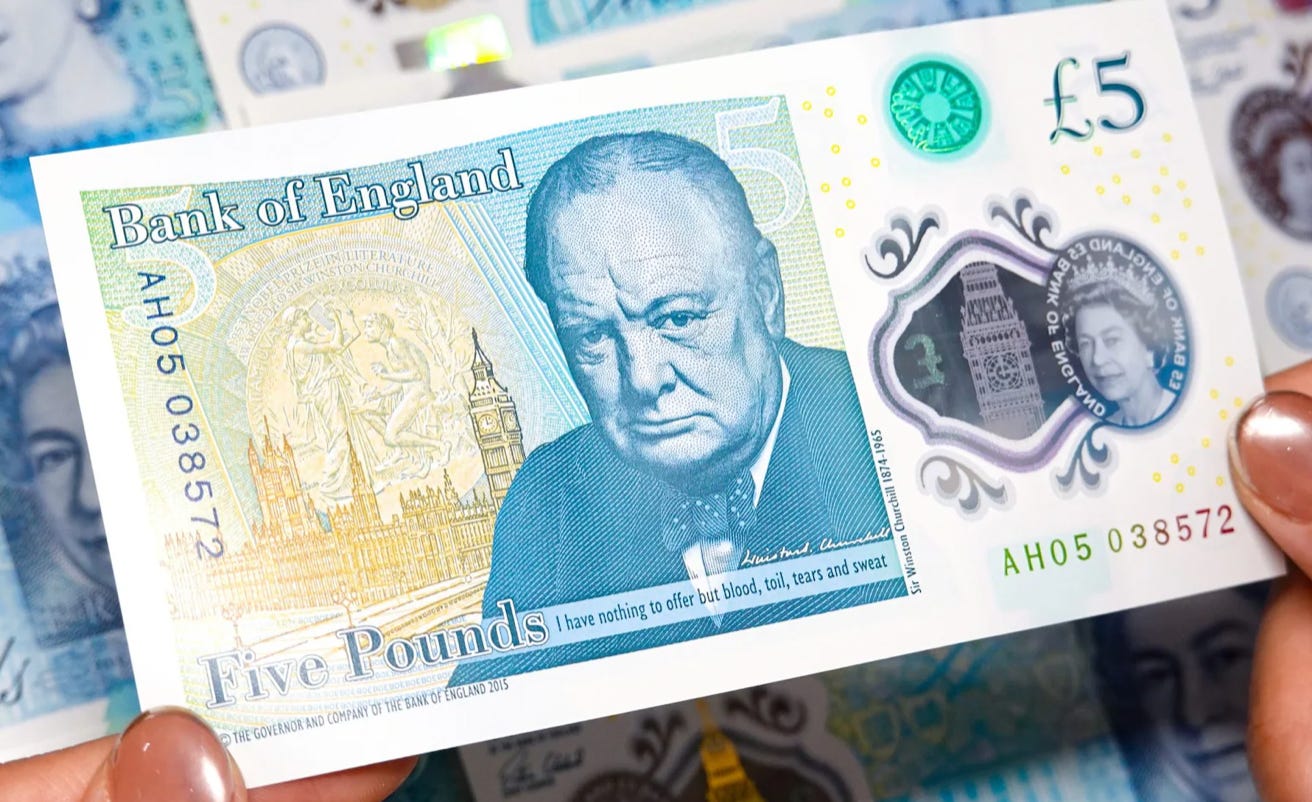
This has naturally led to some controversy, notably from Jacob Rees-Mogg. He is the former minister who, when he was still in the House of Commons, was considered the “member of parliament for the eighteenth century.” The only change he desired in recent years was leaving the European Union, He considered the UK’s membership a historical aberration. Incidentally, he’s fond of words like “aberration,” which is why I rather cherish him.
According to Rees-Mogg, the decision clearly demonstrates the Bank of England’s lack of “seriousness.” “Banknotes use symbolism to convey power, strength, and dignity. Cute little furry things don’t do that,” Rees-Mogg told the Daily Mail.
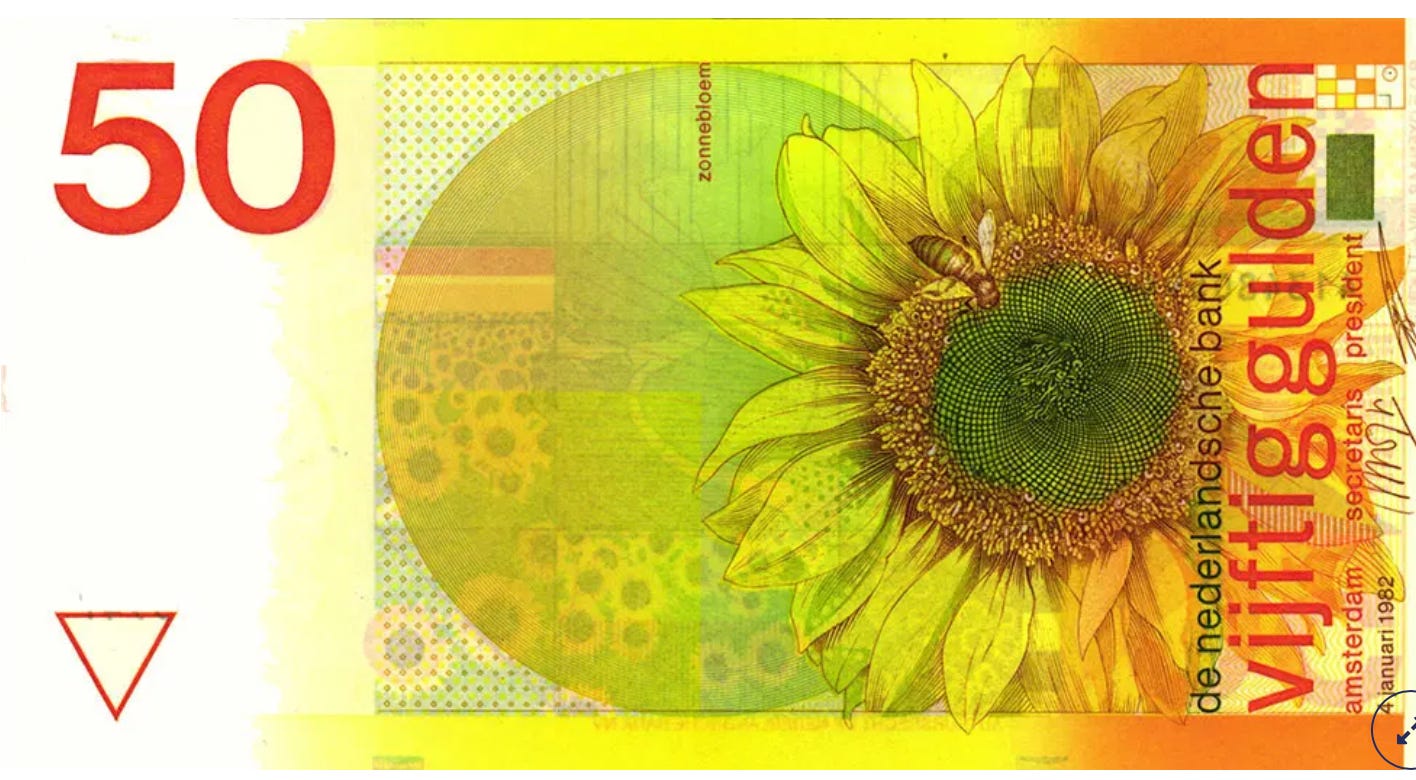
Poor Jacob. He’s wrong again. As a Dutchman, I feel qualified to pass judgment on banknotes. Before the euro was introduced, the Netherlands had the most beautiful banknotes in the world. I especially loved the yellow sunflower. I still have a copy of it in a stamp album somewhere, but I can’t find it right now.
The hundred guilder note was good, and the lighthouse…
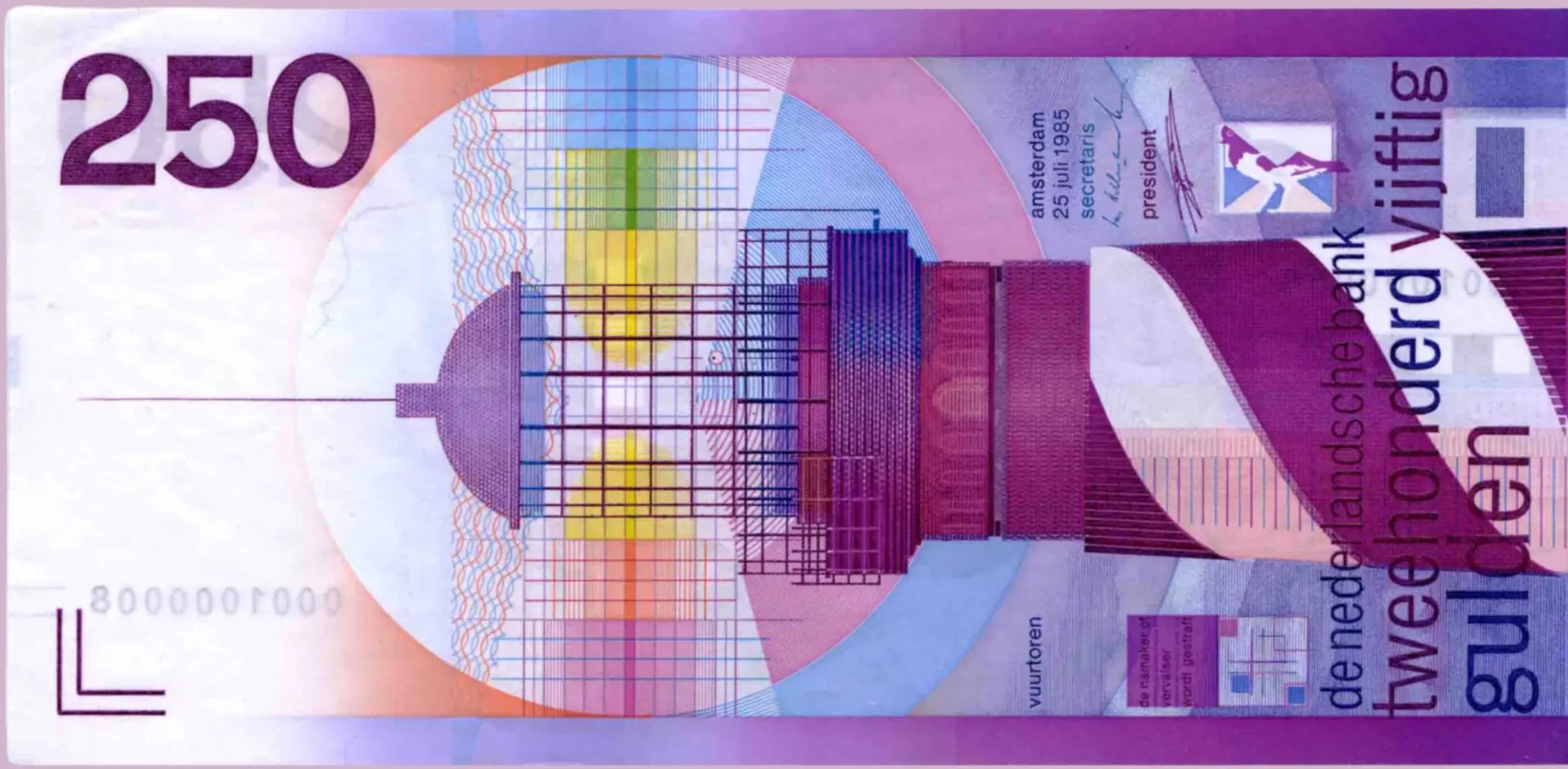
Oh, I’d better stop there, I’ll start longing for the guilder, which I don’t do.
Anyway, the Bank of England recently decided it was time for a new round of banknotes. As is now common practice, they conducted a poll asking people what they’d most like to see on the notes. It was a close call between flora and fauna (60%) and historic buildings (56%), followed at a distance by historical figures (38%) and celebrities from the arts, culture, and sport. Thankfully, the Bank didn’t opt for Wayne Rooney on the five pound note!
The reason for the change is that the banknotes must be constantly updated to curb counterfeiting. A continuous search for historical figures could have been an option, of course, but finding the right person is a constant source of trouble. The number of women remains seriously underrepresented, and no one of immigrant descent has ever been nominated.
The advantage of flowers and animals is that they’re not politically correct or incorrect. As I write this, I realise that’s not entirely accurate. Ten years ago, there was a survey among Britons about their favourite bird. The robin came out on top.
There isn’t a friendlier bird. Yet, The Guardian thought differently. “Britain has spoken,” proclaimed this always-grumpy newspaper. “It has chosen a vicious, murderous brute as our national bird.” That bodes ill for the upcoming decision on which animal or flower will appear on the banknotes.
Makes me want to visit you in the UK!