
Twinings
Special London shops

I’m not a real tea lover, but whenever I pass the Twinings store on the Strand, I always pop in. It’s a beautiful shop, made all the more special by the fact that it’s been in the same location for over three hundred years.
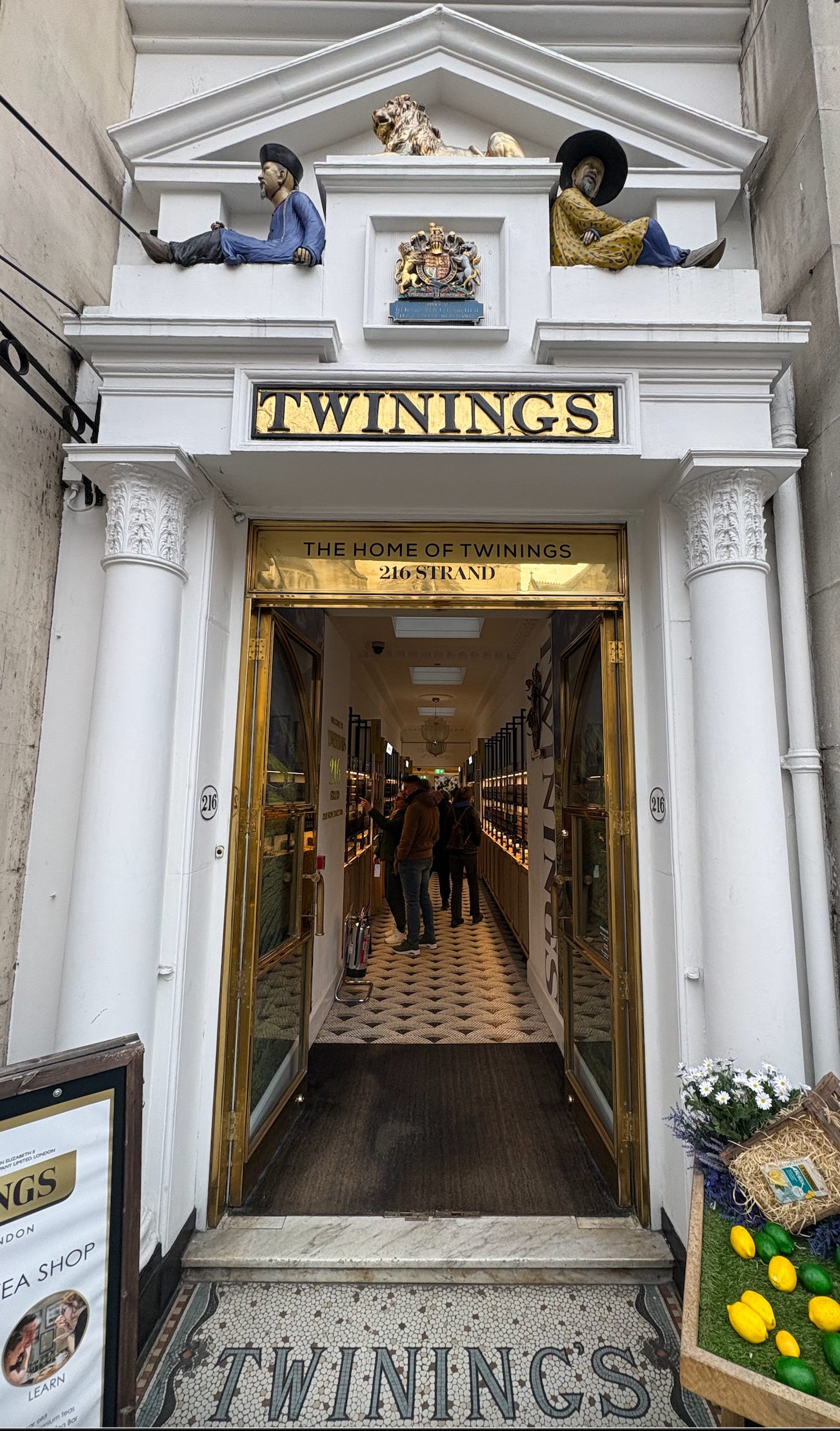
Thomas Twining, the tea company’s founder, bought the building in 1706. It was, incidentally, a coffeehouse at the time, one of apparently two thousand in central London at that time. Rum and brandy were also served, as Londoners of the time considered coffee alone a bit meager.
To differentiate itself from the competition, Twining began selling tea. The drink, introduced in Europe a century earlier, quickly gained popularity, and by 1715 it was the store’s primary source of income.
Twinings has numerous other achievements to its credit. For example, the tea manufacturer has been a Royal Warrant Holder since 1837. Queen Victoria was the first to bestow this honorary title. Her example has been followed by all her successors, including the current King Charles.
Twinings was also the first maker of what became known as Earl Grey tea, still one of its most popular blends. This came about when a diplomat serving under the Prime Minister Charles Grey saved the life of a Chinese official. In gratitude, he was sent a bag of tea, including the recipe for making the special blend.
The tea was so popular with Grey and his staff that in 1831, Twinings was asked to reproduce the blend and to sell it to others so everyone could enjoy it. The tea was named after the prime minister: Earl Grey.
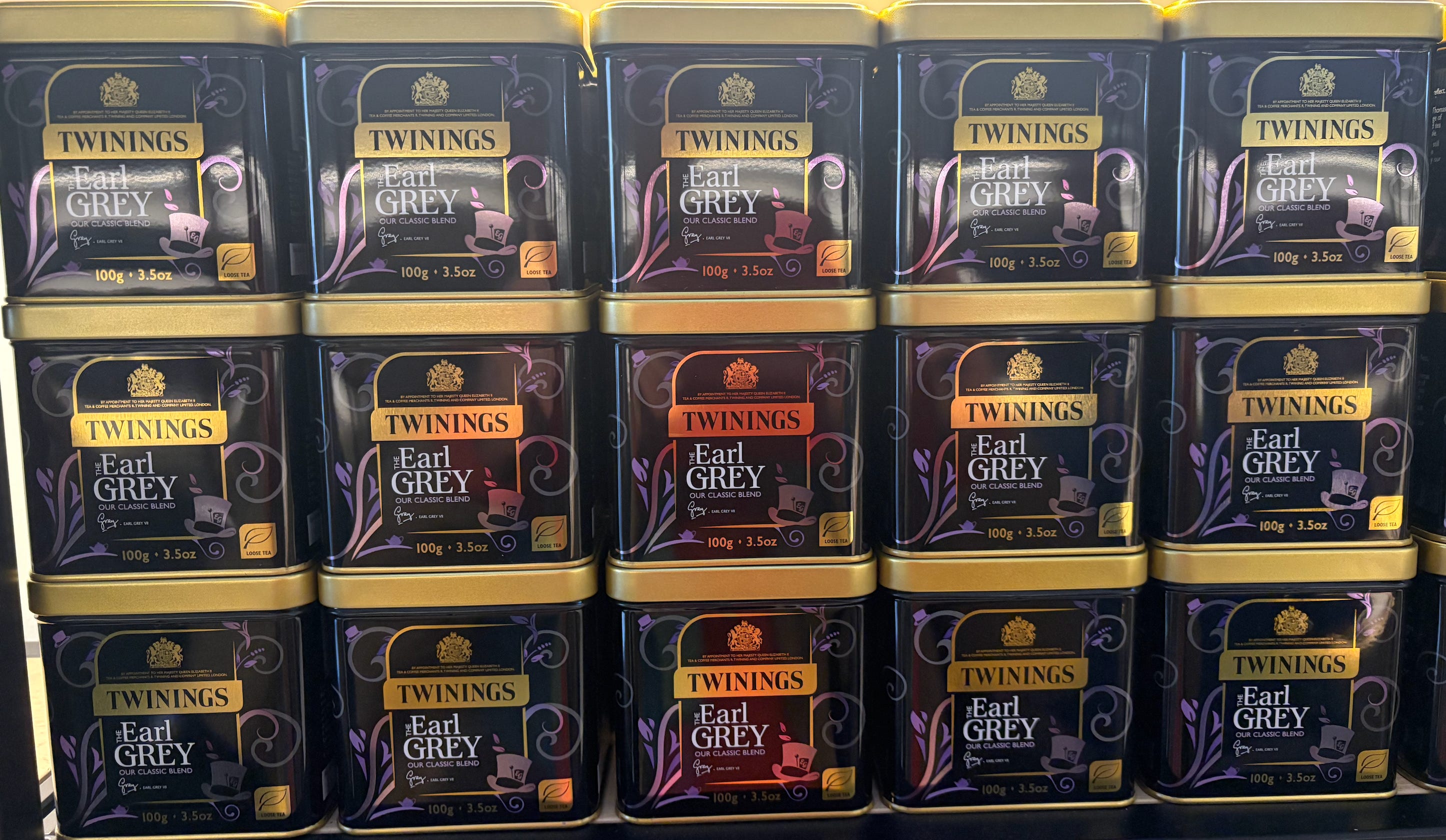
To Twining’s great chagrin, rivals soon started imitating it. However, the tea manufacturer boasts that the current generation of Earl Greys—we’re now at number eight—officially designates Twinings as the original maker of Earl Grey.
Nowadays, the shop is mainly frequented by tourists. Things used to be different. Jane Austen is said to have been a regular visitor. So was the painter William Hogarth, best known for his satirical and hilarious paintings.
Tea was prohibitively expensive during Hogarth’s tenure (1697-1764), and Hogarth’s debts to Twinings were mounting. The problem was resolved by commissioning Hogarth to paint a portrait of Thomas Twinings, the firm’s founder.
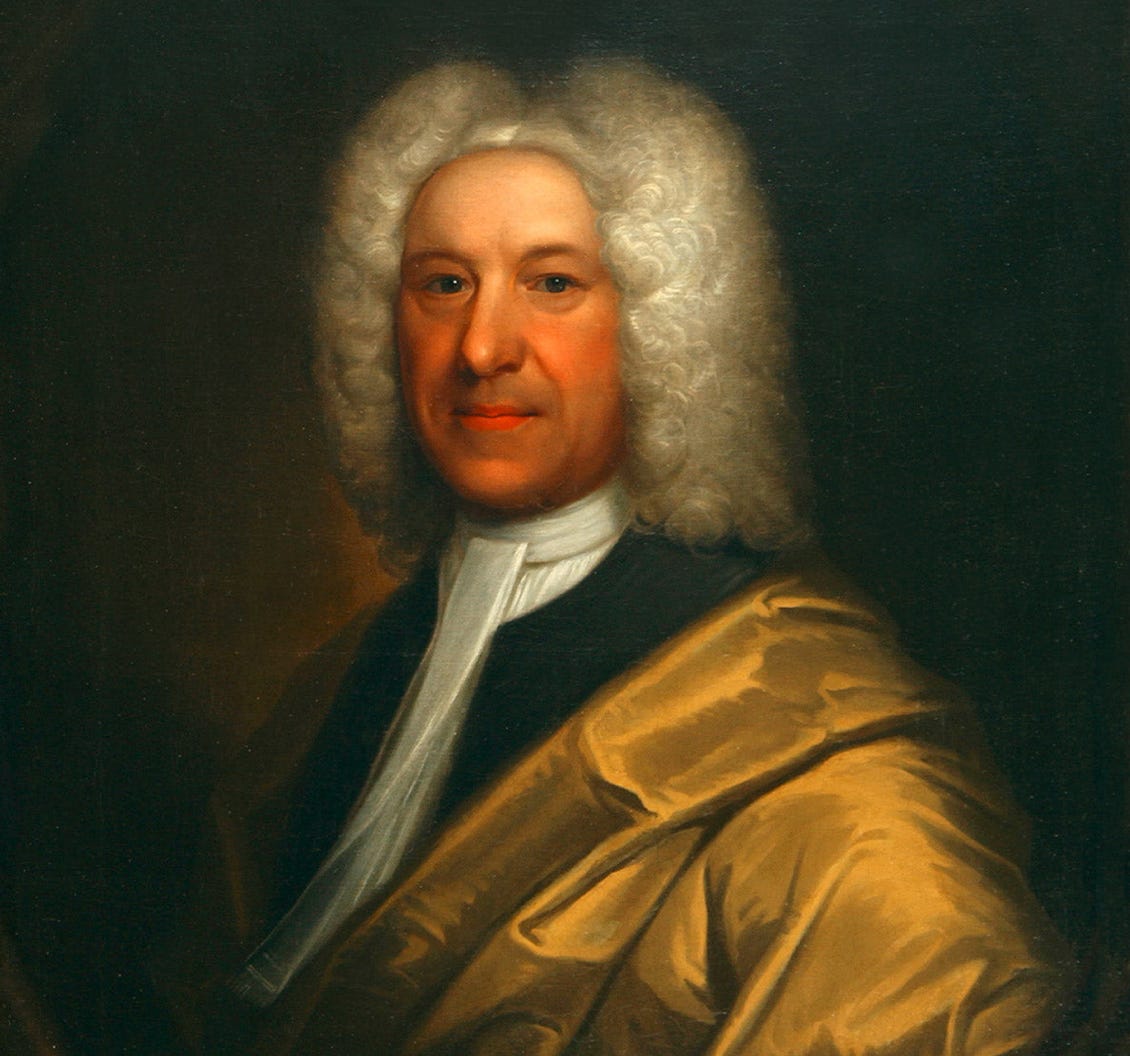
And so it happened. The heirs considered it such a success that Hogarth never had to pay for the tea he later purchased. The painting hangs above the bar at the end of the narrow shop, where tea can be sampled. I always take a look at it when I pass by. You should too.