
Visiting the Onslows

Tic tic tic, a woodpecker pecks on a tree in the gardens of Clandon Park. Tic tic tic comes the sound from the near the country house. Almost ten years ago, nearly 80% of it burned down. Behind the tarps, (which have been pulled over the Onslow family seat like a work of art by Christo) carpenters and plasterers are working on a limited renovation. It is being carried out by the National Trust, a kind of British equivalent of the Dutch organisation, Monumentenzorg.
Rupert Charles William Bullard Onslow, the Eighth Earl of Onslow, formerly the Viscount of Cranley, did not want any of it. ‘Leave it to the birds,’ the nobleman said recently. But other Onslows would rather see the Palladian country house completely restored to its former state. This is also the preference of the conservative movement Restore Trust.
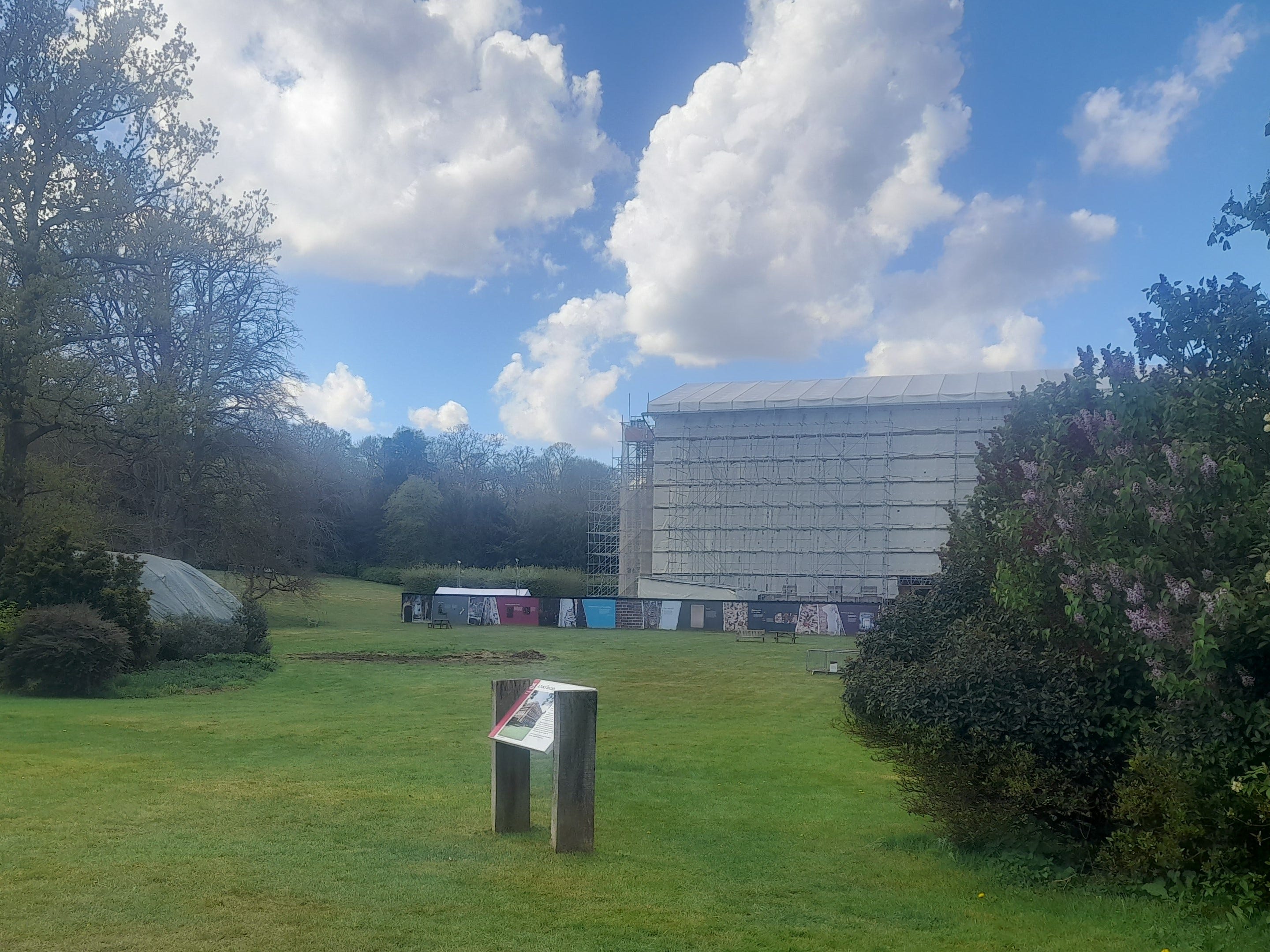
The National Trust, which has no fewer than 5.37 million members, has chosen a middle path. It is restoring the damaged parts of the building, but is shying away from a large-scale renovation. There will be a café on the roof - with a beautiful view that goes all the way to London - and visitors can walk on metal skybridges to see 'an exposed country house'. Poor Clandon will not rise from the ashes, like Windsor Castle and Notre-Dame.
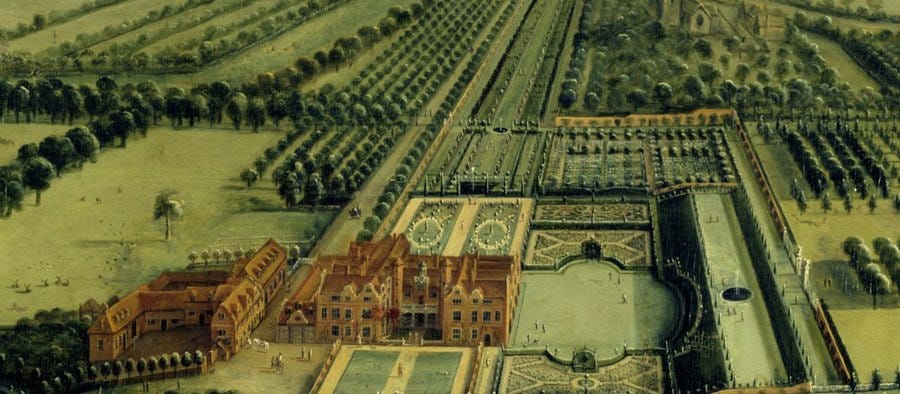
Anyone who visits the site for a spring walk in the gardens (created by Lancelot 'Capability' Brown) will be given a history lesson through photos and text on panels. That's what the National Trust is good at. Uplifting the people. For example, the display includes a a 17th century drawing by the Haarlem artist Leendert Knijff (Leonard Knyff to the English). It is the Tudor country house where the Onslows initially lived on the property.
In the early 18th century, their medieval mansion gave way to a Palladian building designed by Venetian architect Giacomo Leoni. This was a suitable residential palace for the Onslows, who held a powerful position in English society. Three Onslows have been Speaker of the House, including Arthur Onslow, who for more than three decades shouted “Order! Order!” and became known as “The Great Speaker.”
Over the centuries, the Onslows regularly received royal visitors. The young George III liked to come and watch the races and try his gambling luck at the nearby Merrow Down course. For much of the 19th century, Clandon Park was uninhabited, but under the Fourth Earl of Onslow, the estate came back to life. King George V and his Mary became popular weekend guests.
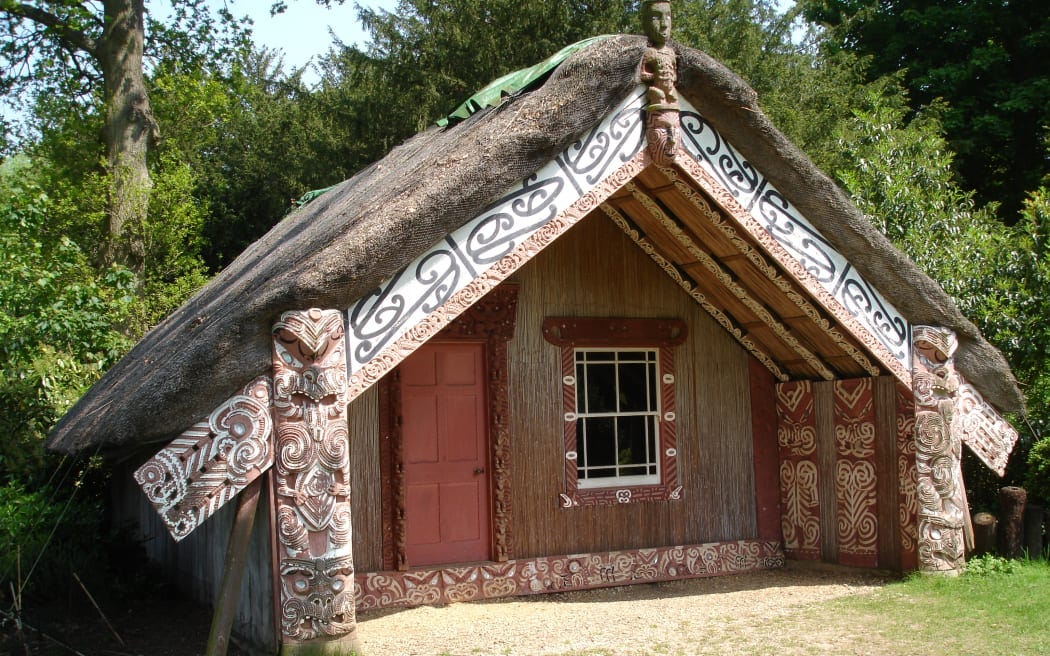
The Earl was a man of many talents. He had green fingers and created a “Dutch Garden,” modelled on the garden of the same name at Hampton Court. In the garden he placed a Hinemihi, a Maori garden house that he had shipped from New Zealand. It was a memento of his time as a local governor there. Taking permanent loans of a foreign country’s heritage was easy back in those days. Now the Maori are demanding their Hinemihi back.
Two large mantelpieces, depicting African slaves, survived the fire. They were made by the 18th-century sculptor John Michael Rysbrack, an Antwerp native who set a trend in Britain. One of his best-known works is the statue of William III of Orange, on horseback, which can be seen in Queen Square in Belfast. It was an affront to the Catholic part of the Northern Irish capital.
After the Second World War, the Onslows, like many other noble families, fell victim to sky-high inheritance taxes. In 1956, Clandon Park was essentially nationalised. The National Trust promised to take good care of it, but things went wrong in 2015 when a fire broke out in the basement after a short in an electrical circuit. Shortly after the fire, Queen Elizabeth visited to show sympathy for the Onslows. After the 1992 fire at Windsor Castle, the late Queen knew how bad a fire can be.
 | A guest post by
|